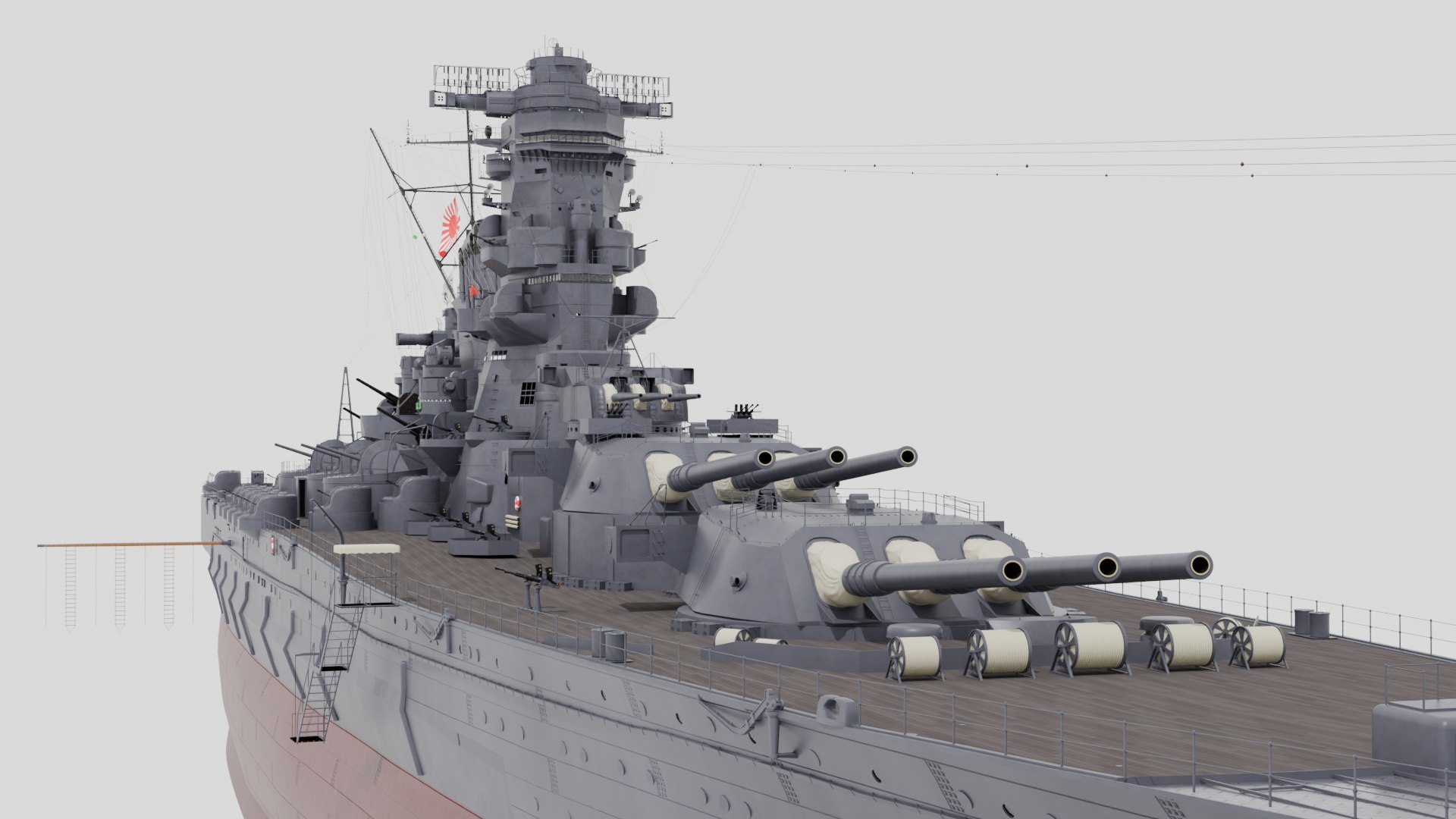
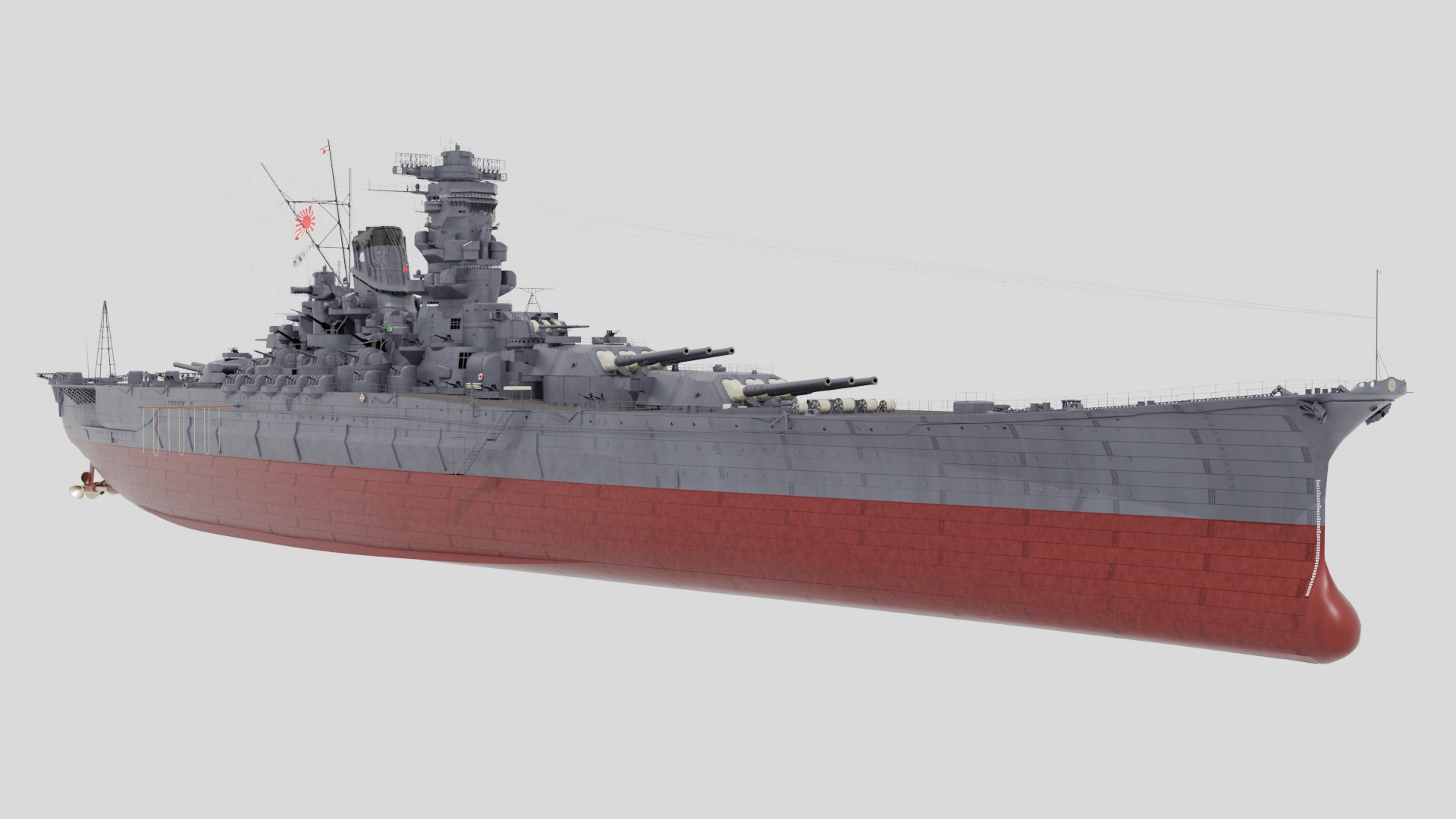
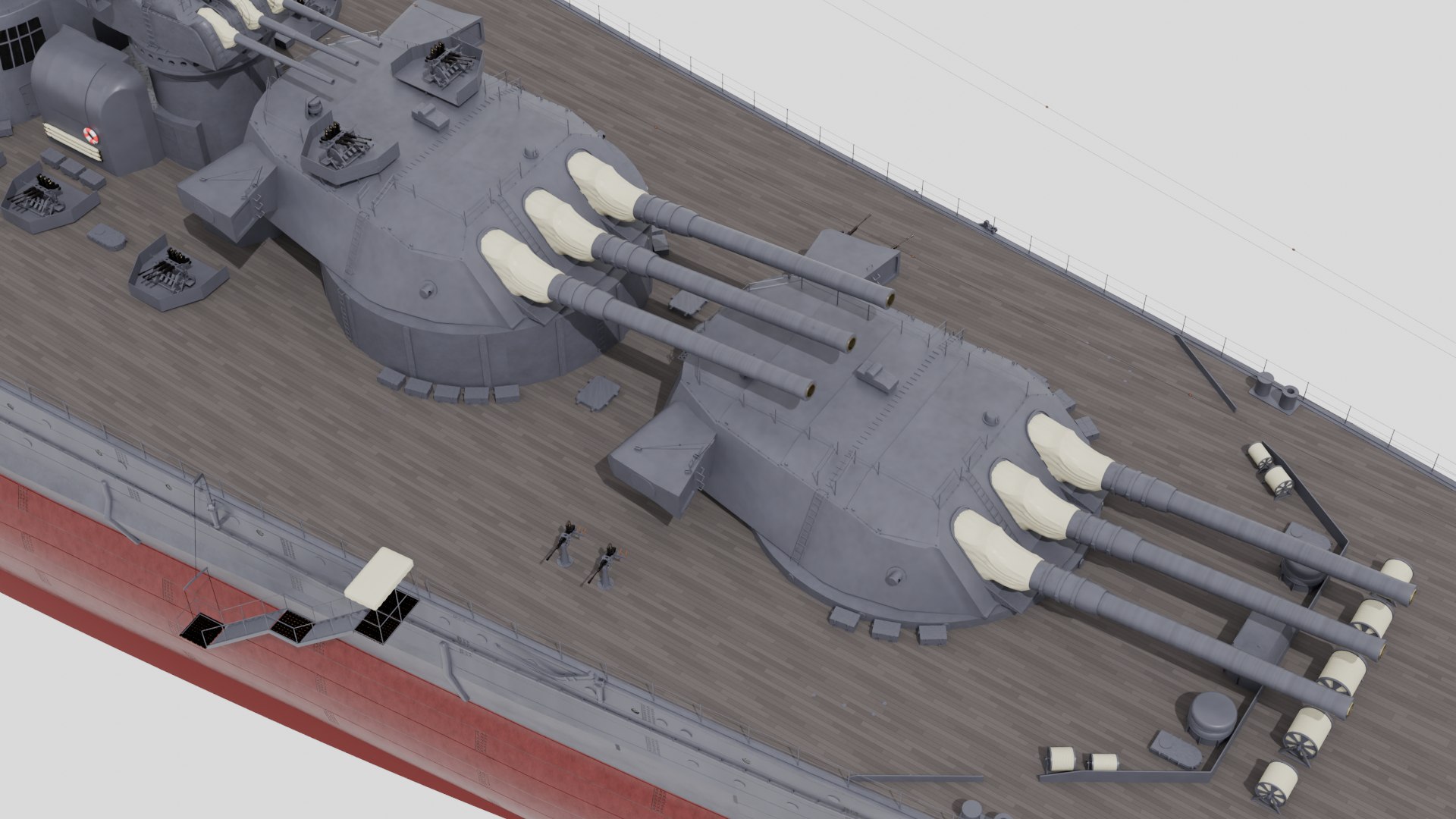
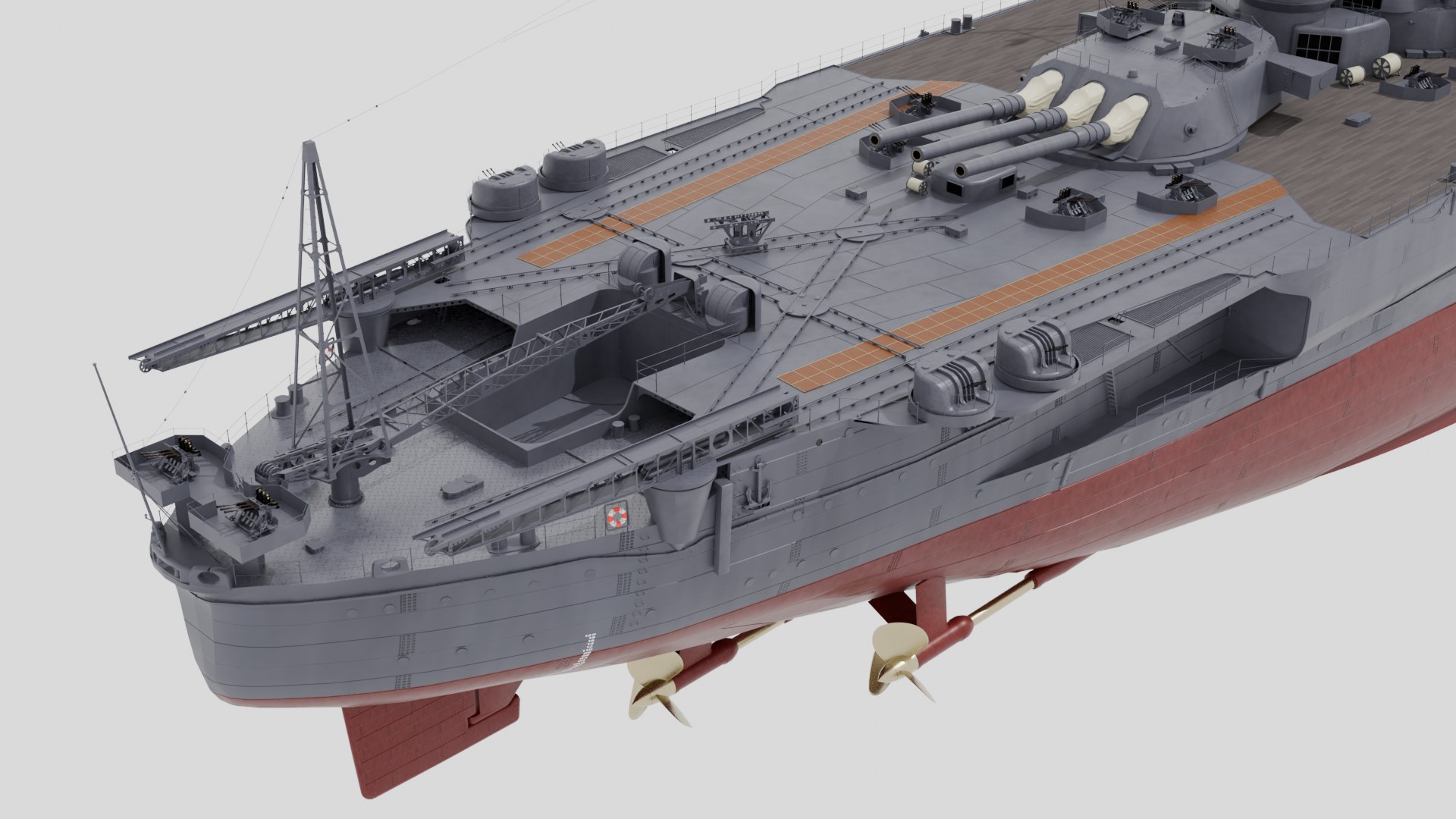
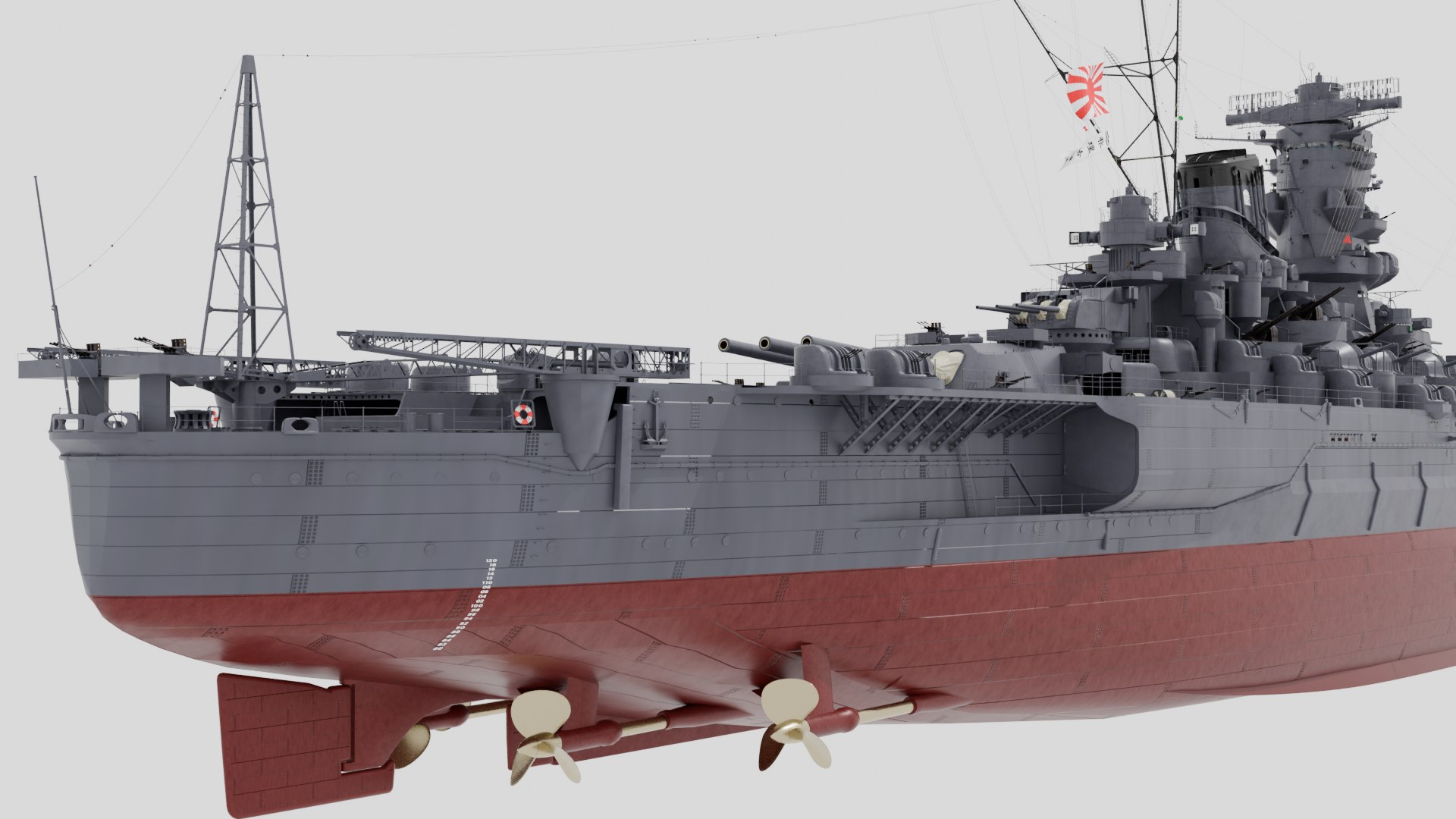
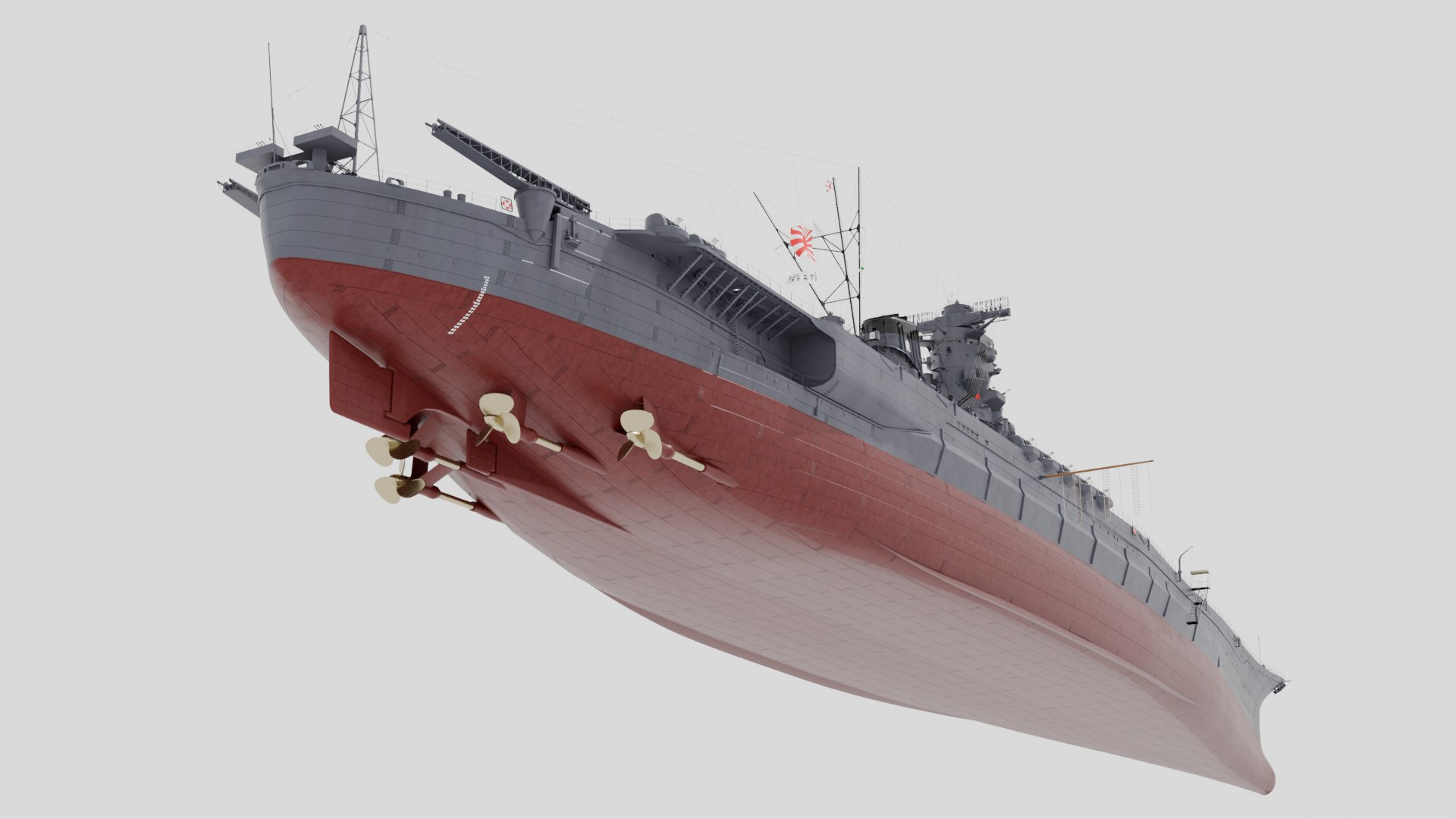
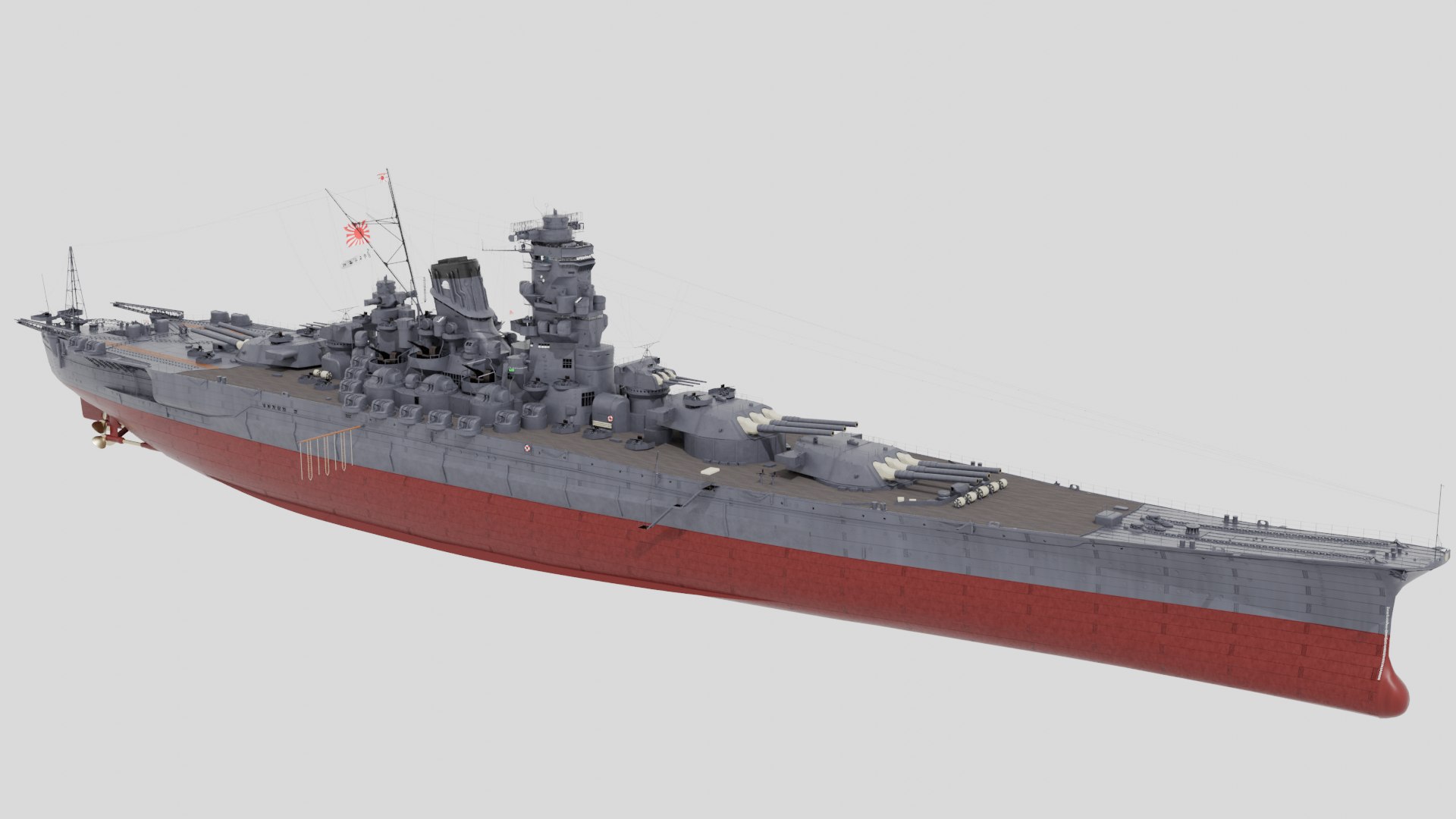
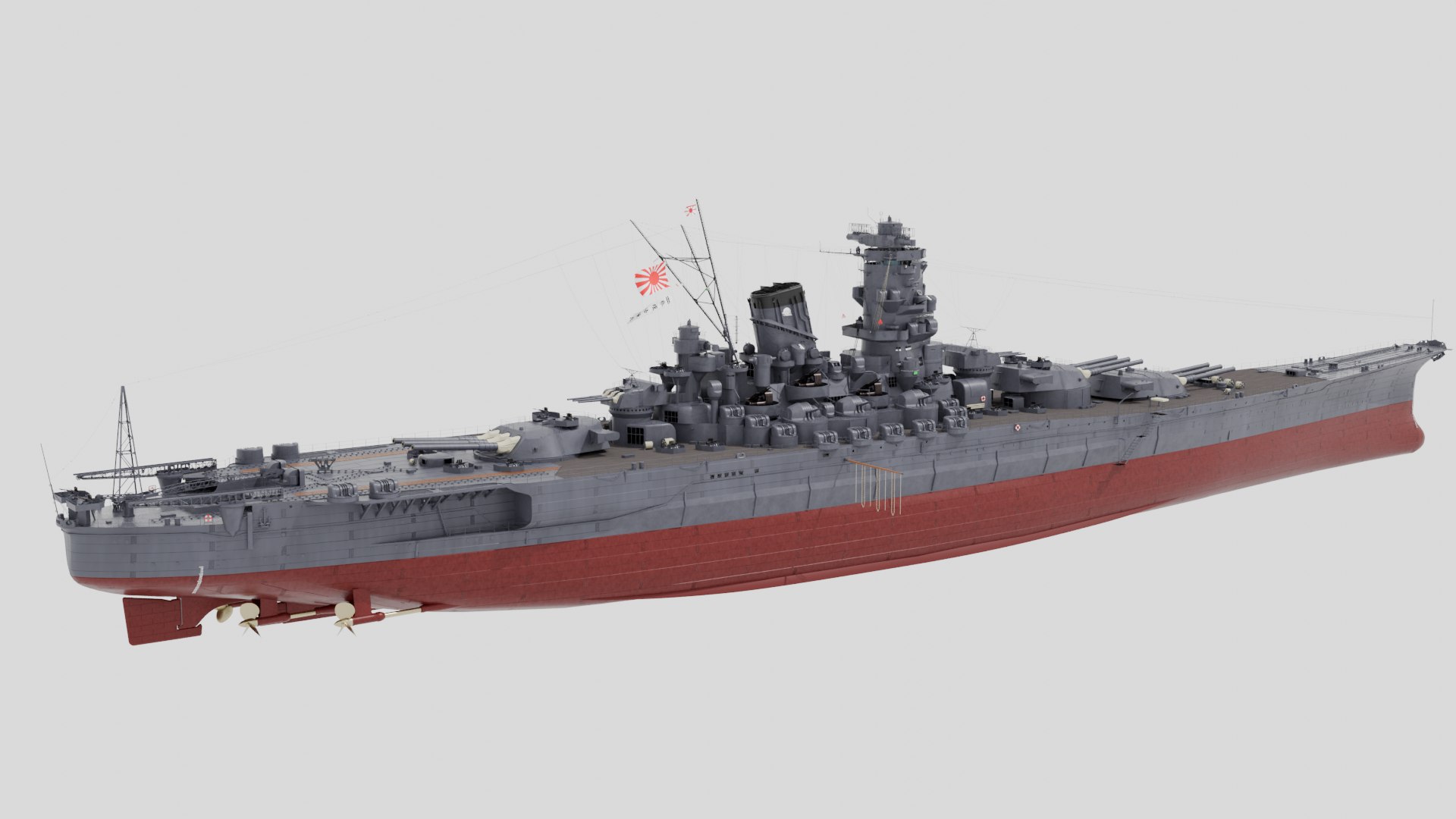
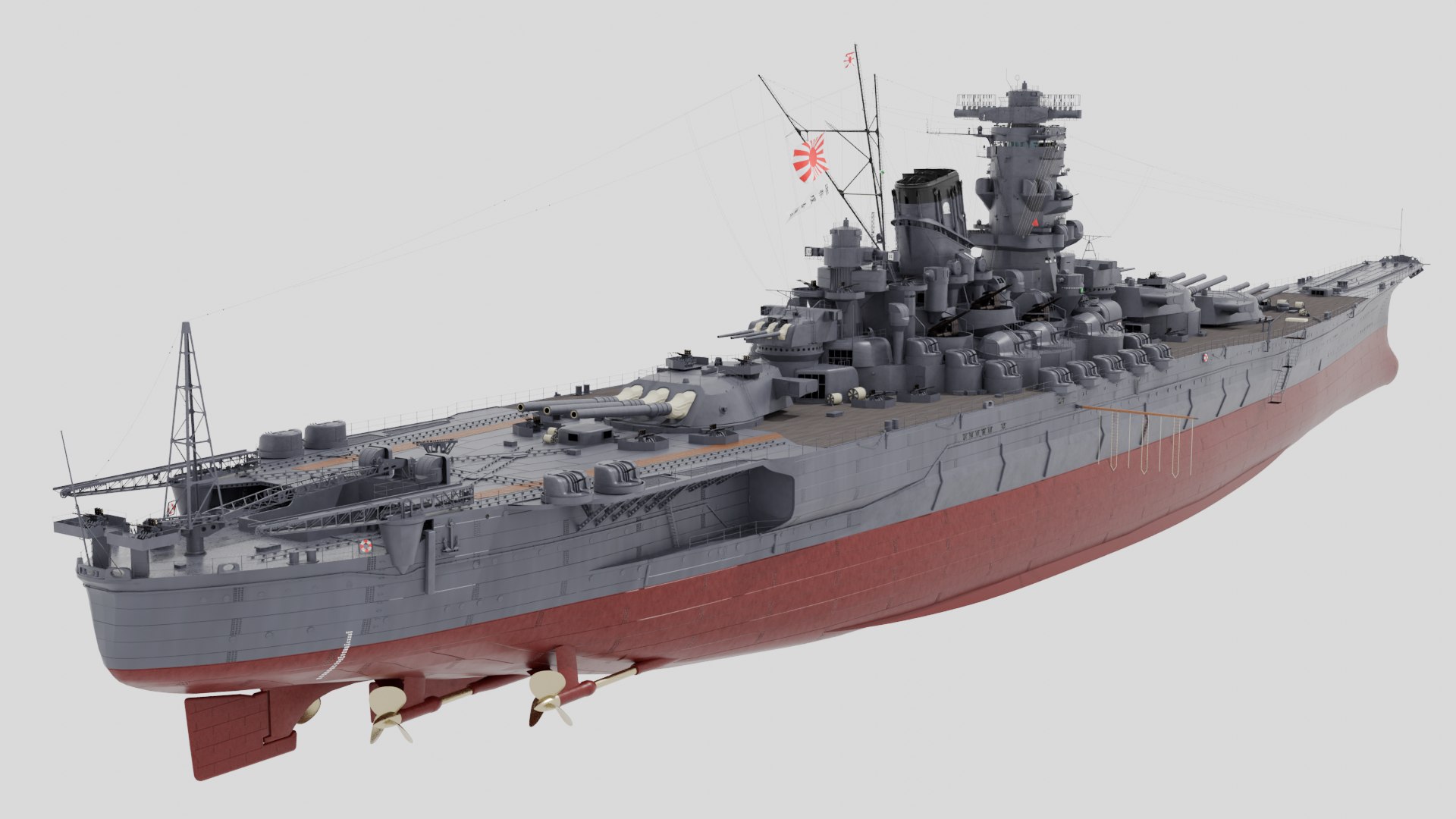
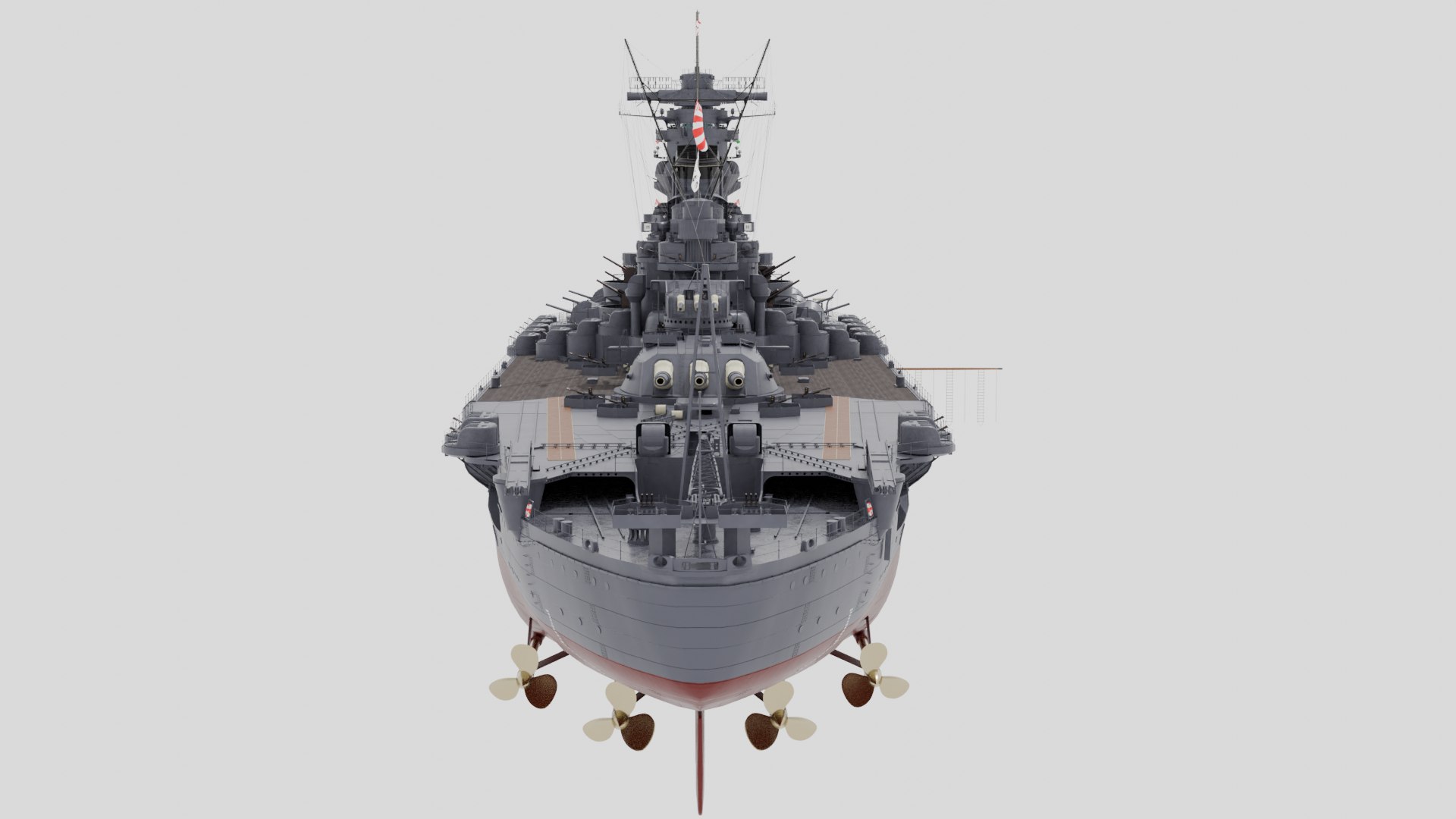
The Yamato, whose name can be translated to mean "Great Harmony" and also refers to the ancient heartland of Japan, was the lead ship of her class of battleships built for the Imperial Japanese Navy (IJN) shortly before World War II. She and her sister ship, Musashi, were the heaviest and most powerfully armed battleships ever constructed, displacing 72,800 tonnes at full load and armed with nine 46 cm (18.1 in) main guns. Designed to counter the numerically superior battleship fleet of the United States, she was sunk in April 1945 during Operation Ten-Go, and remains a significant symbol in naval history.
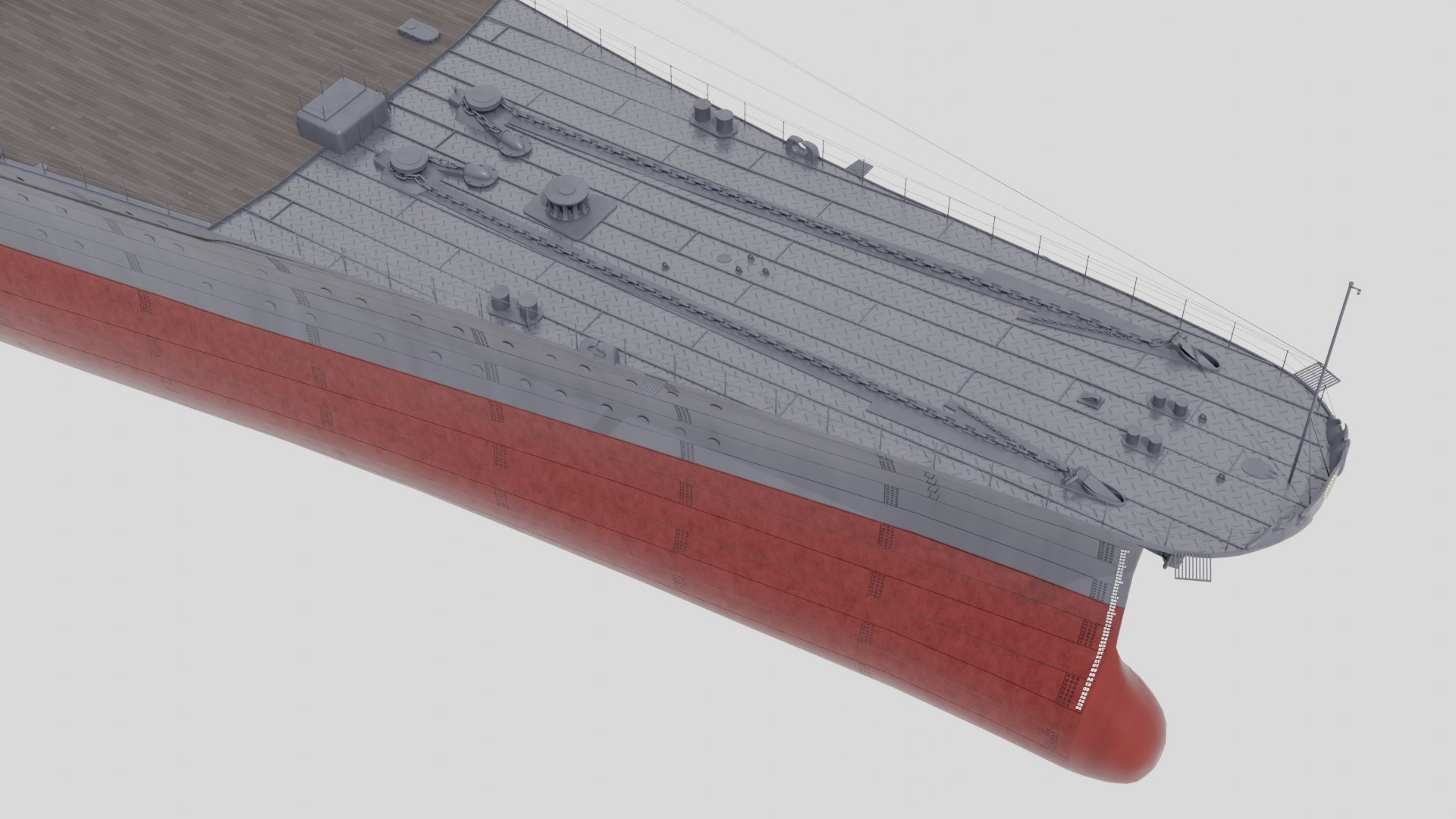
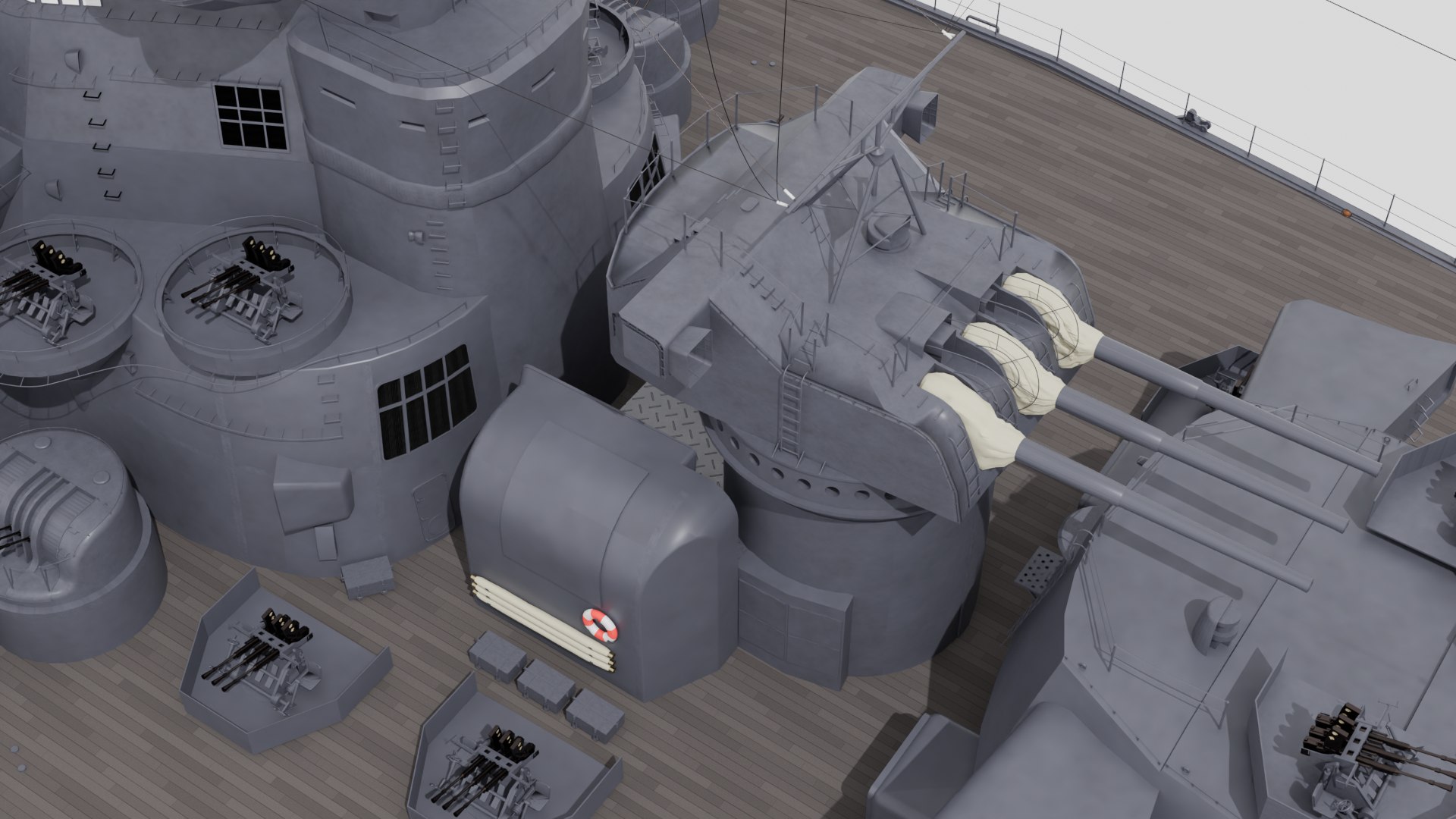
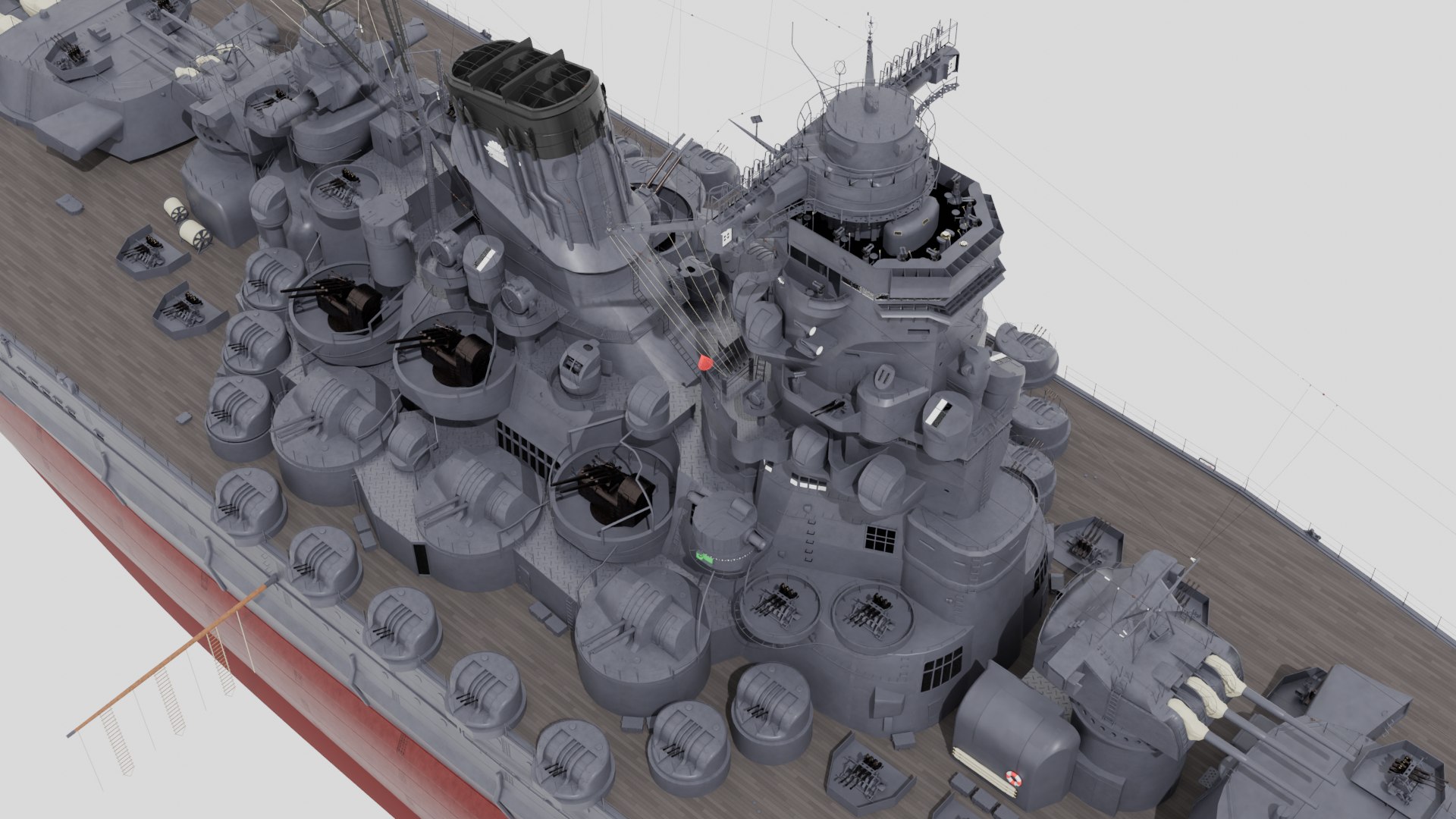
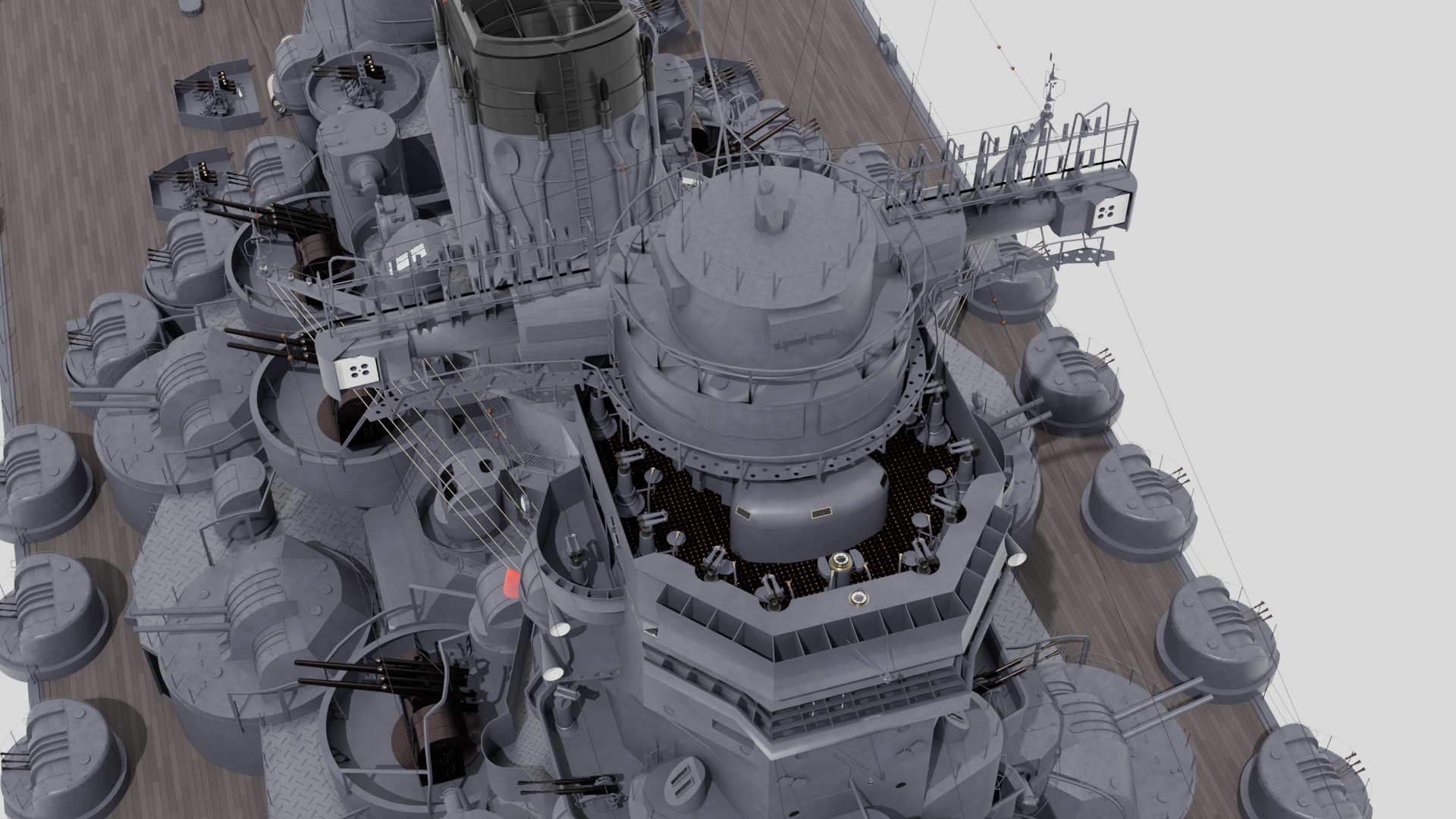
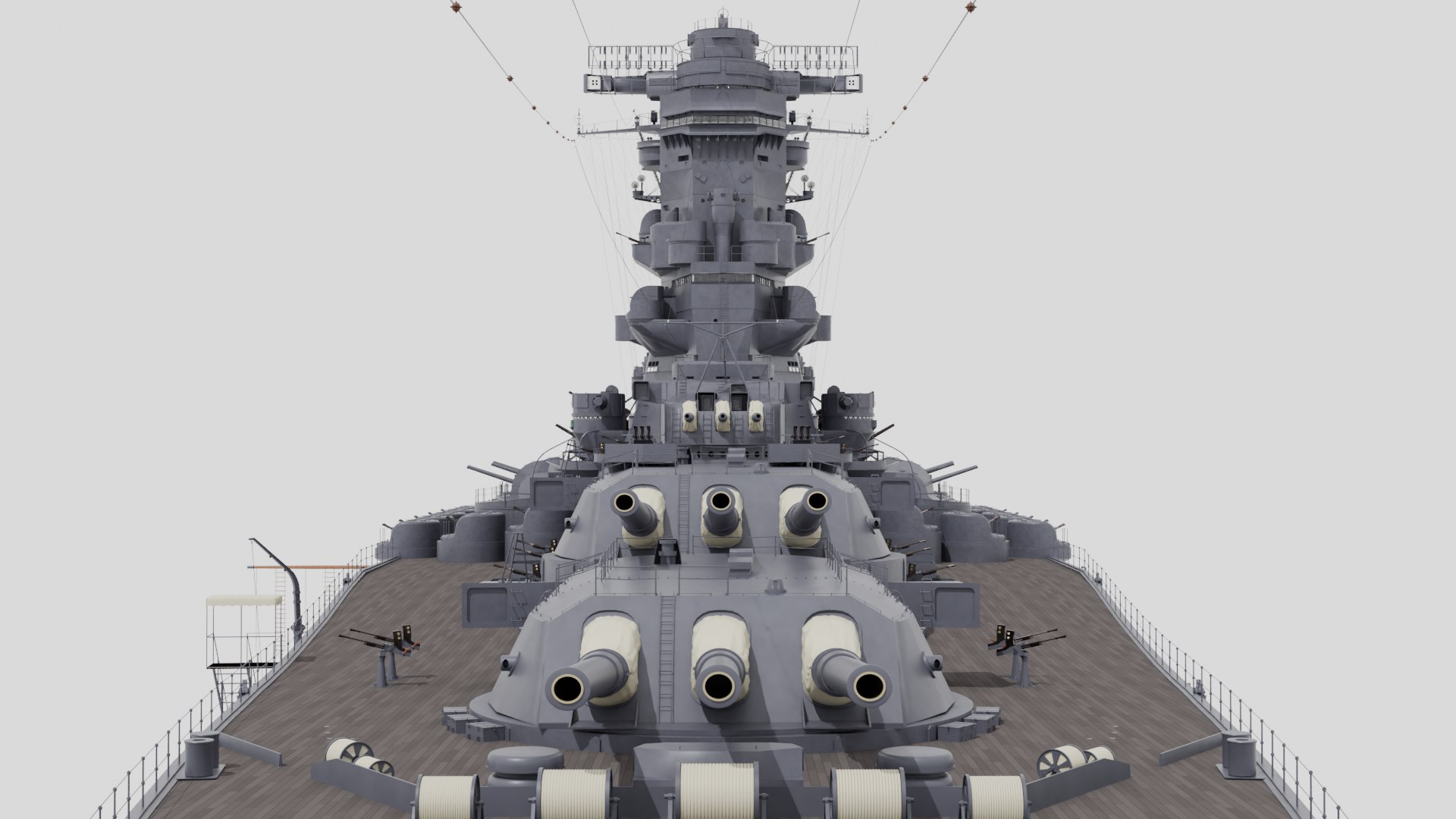
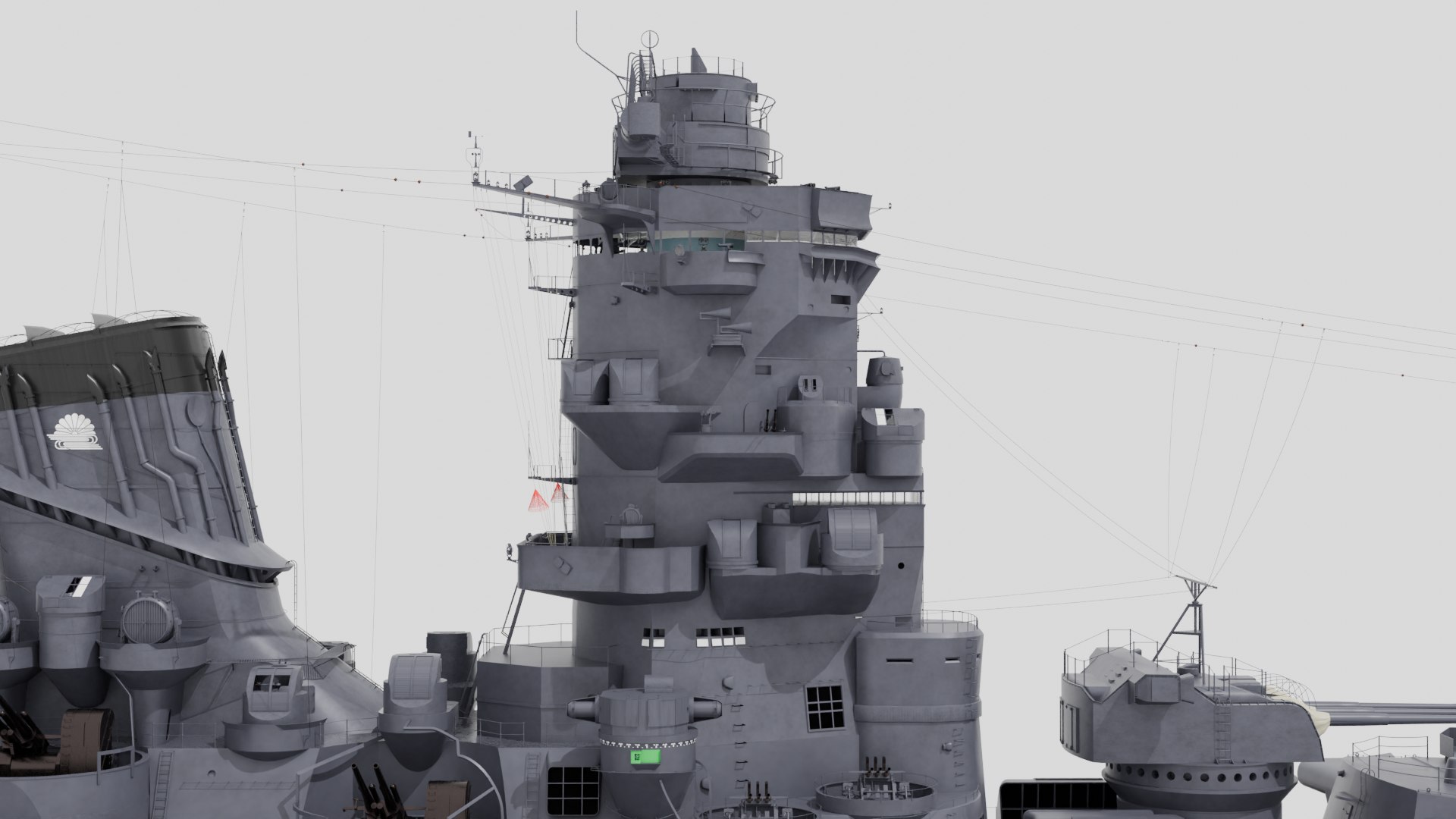
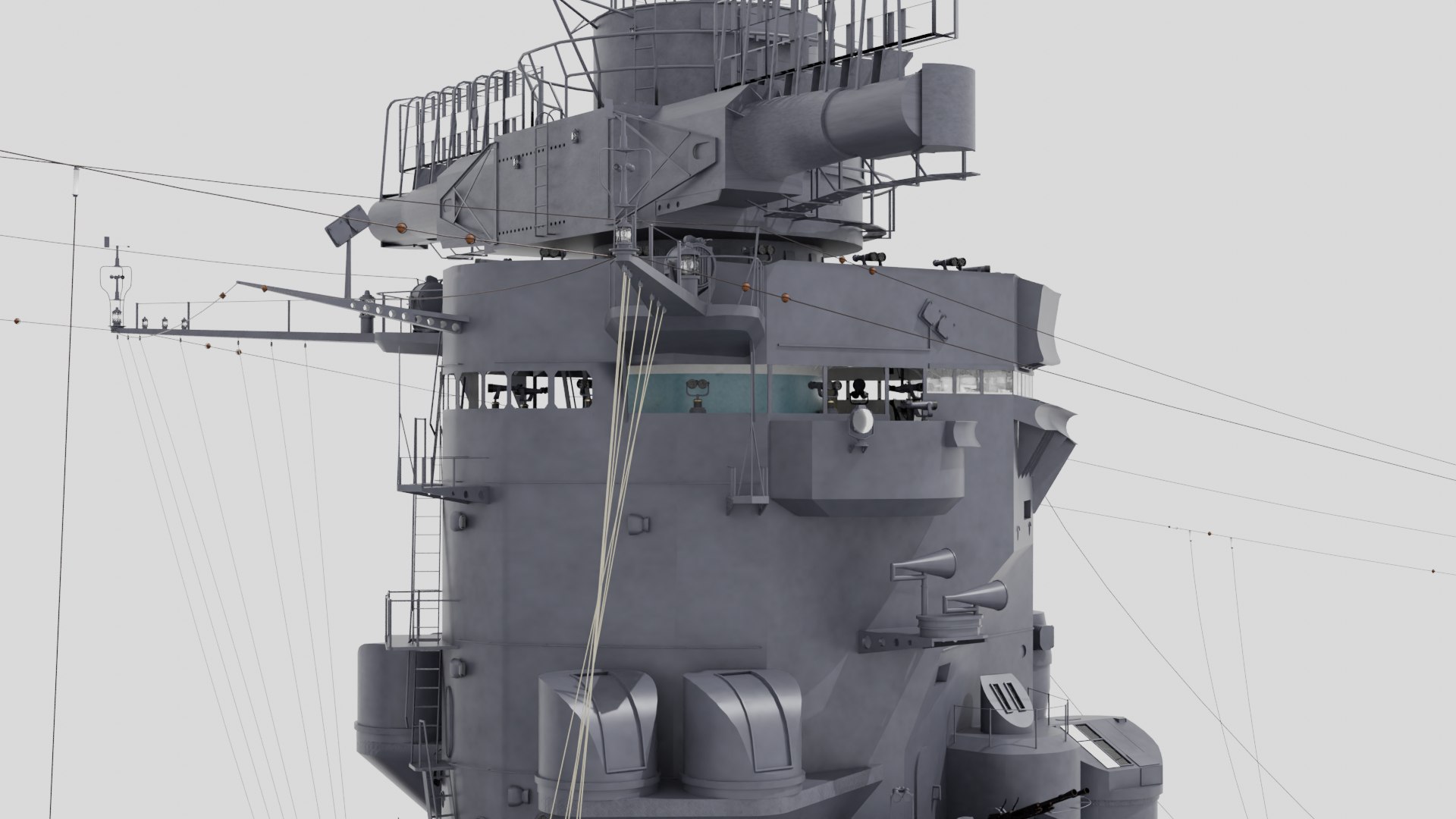
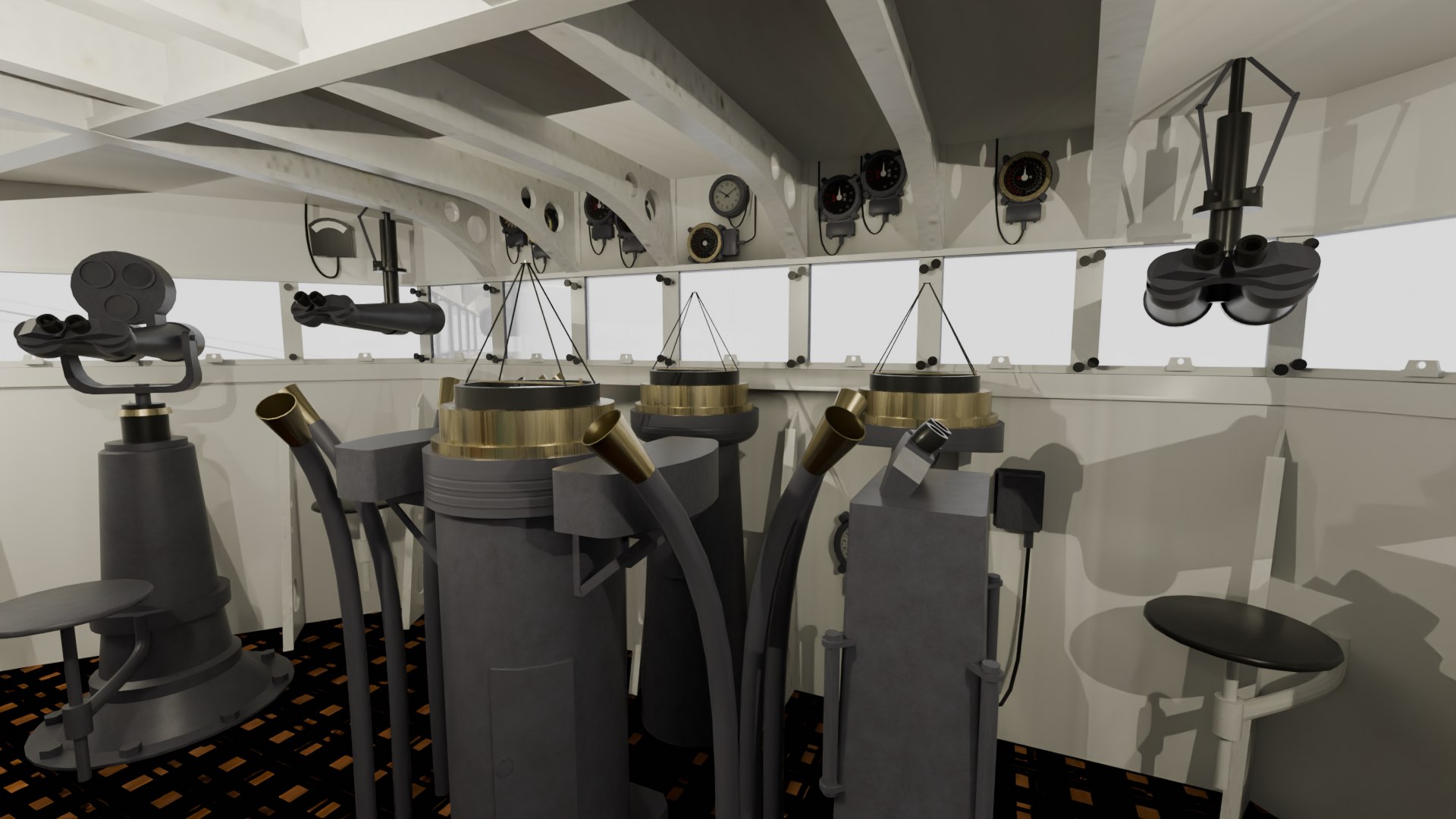
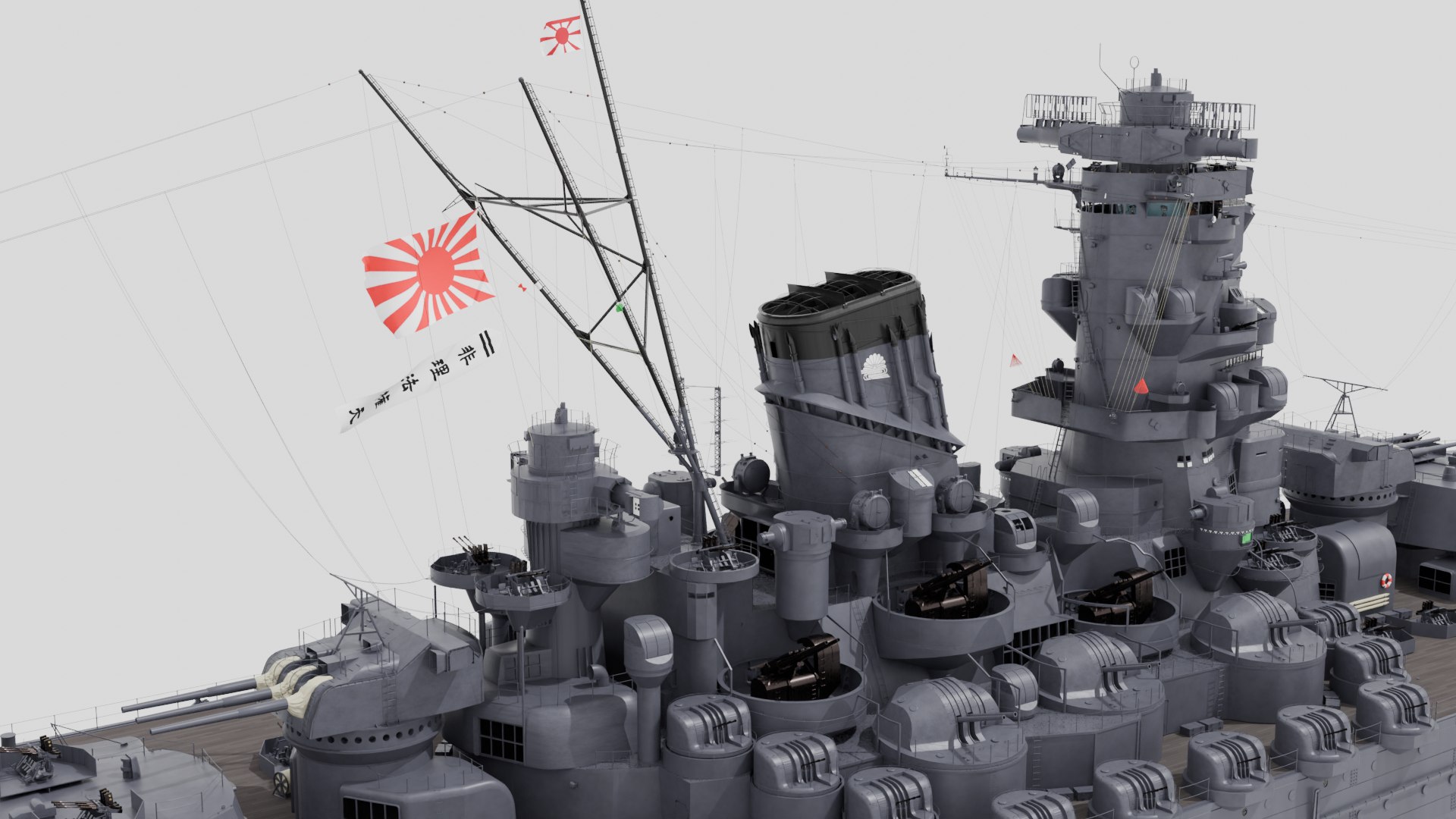
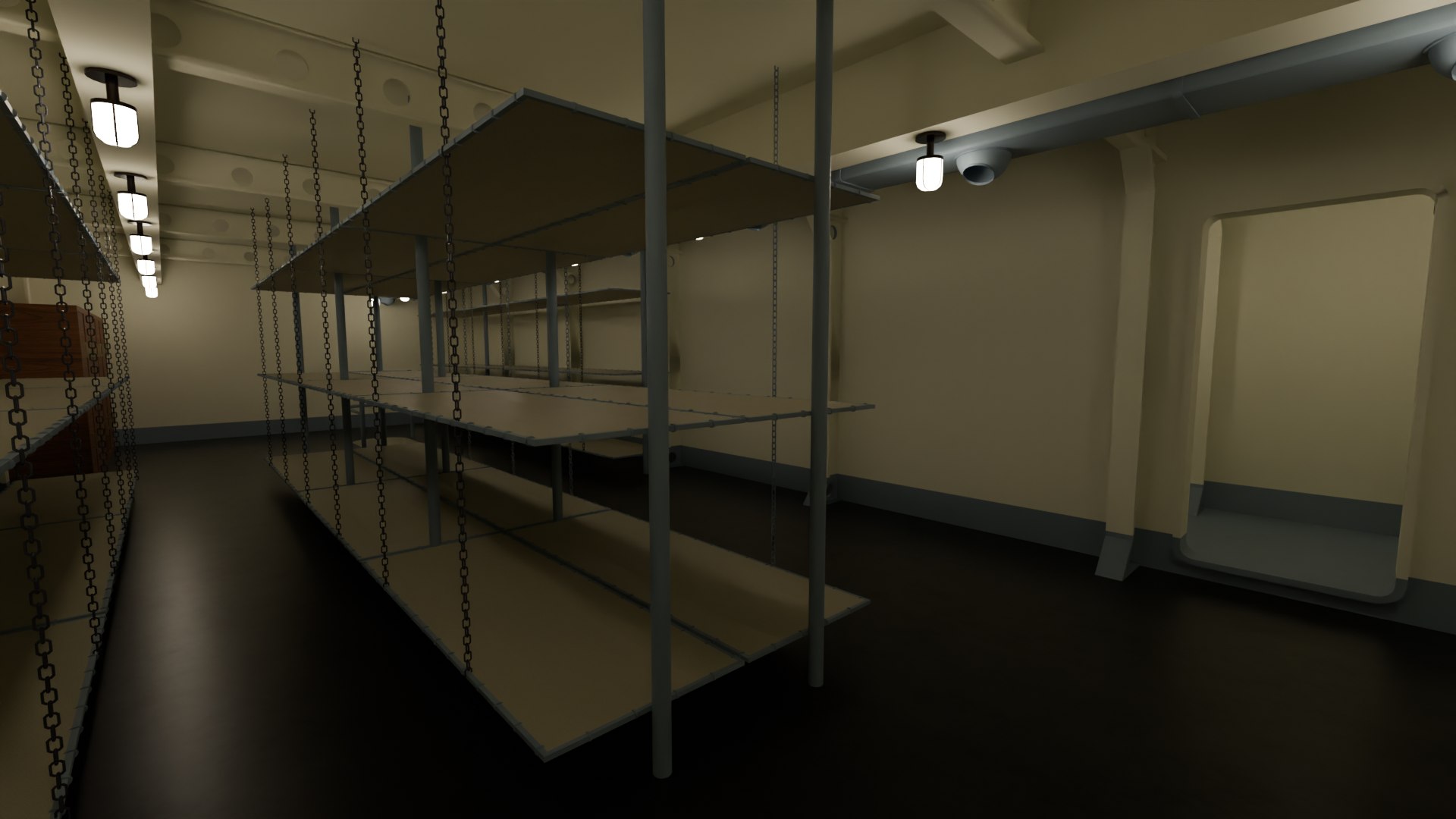
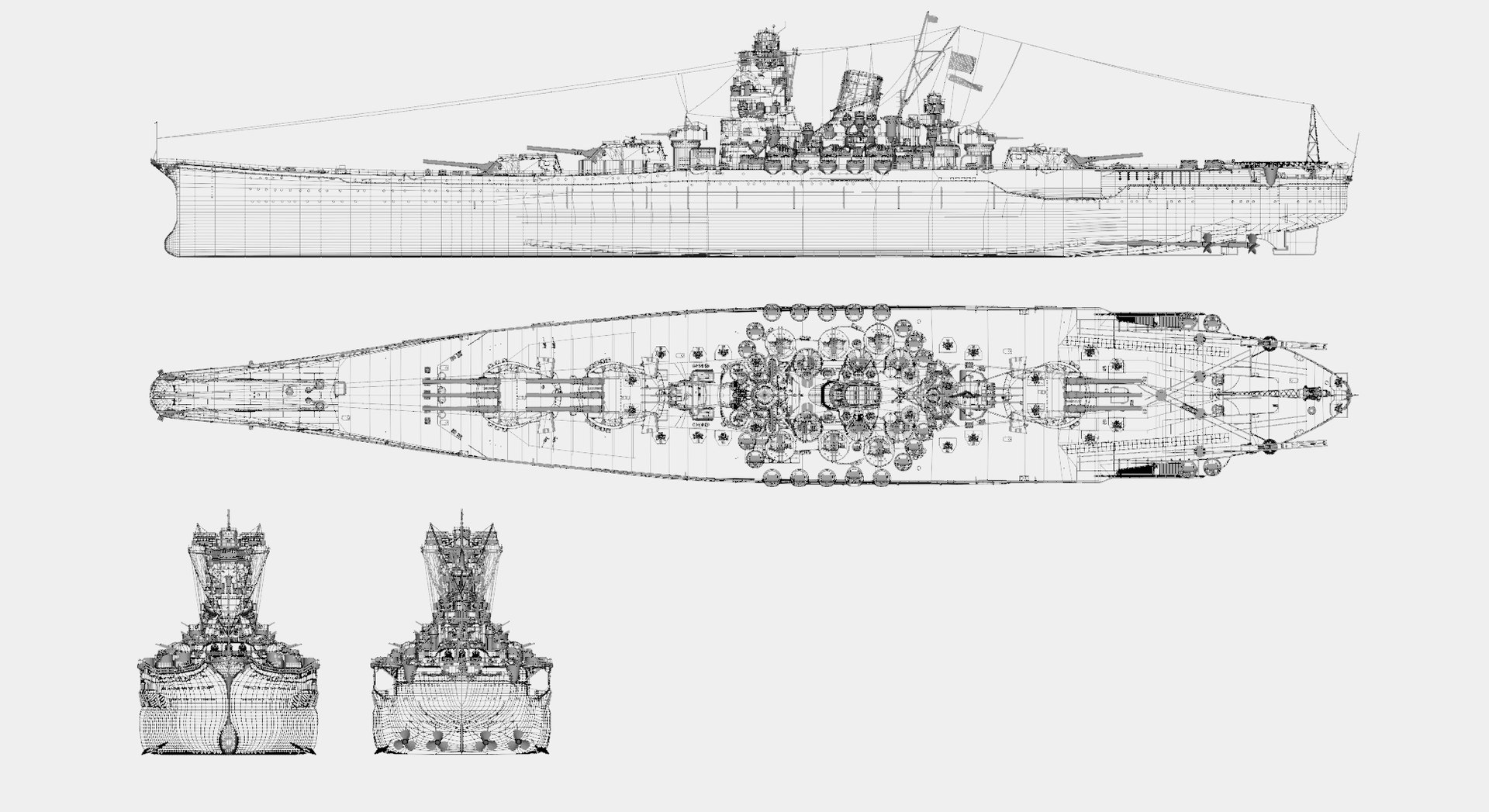
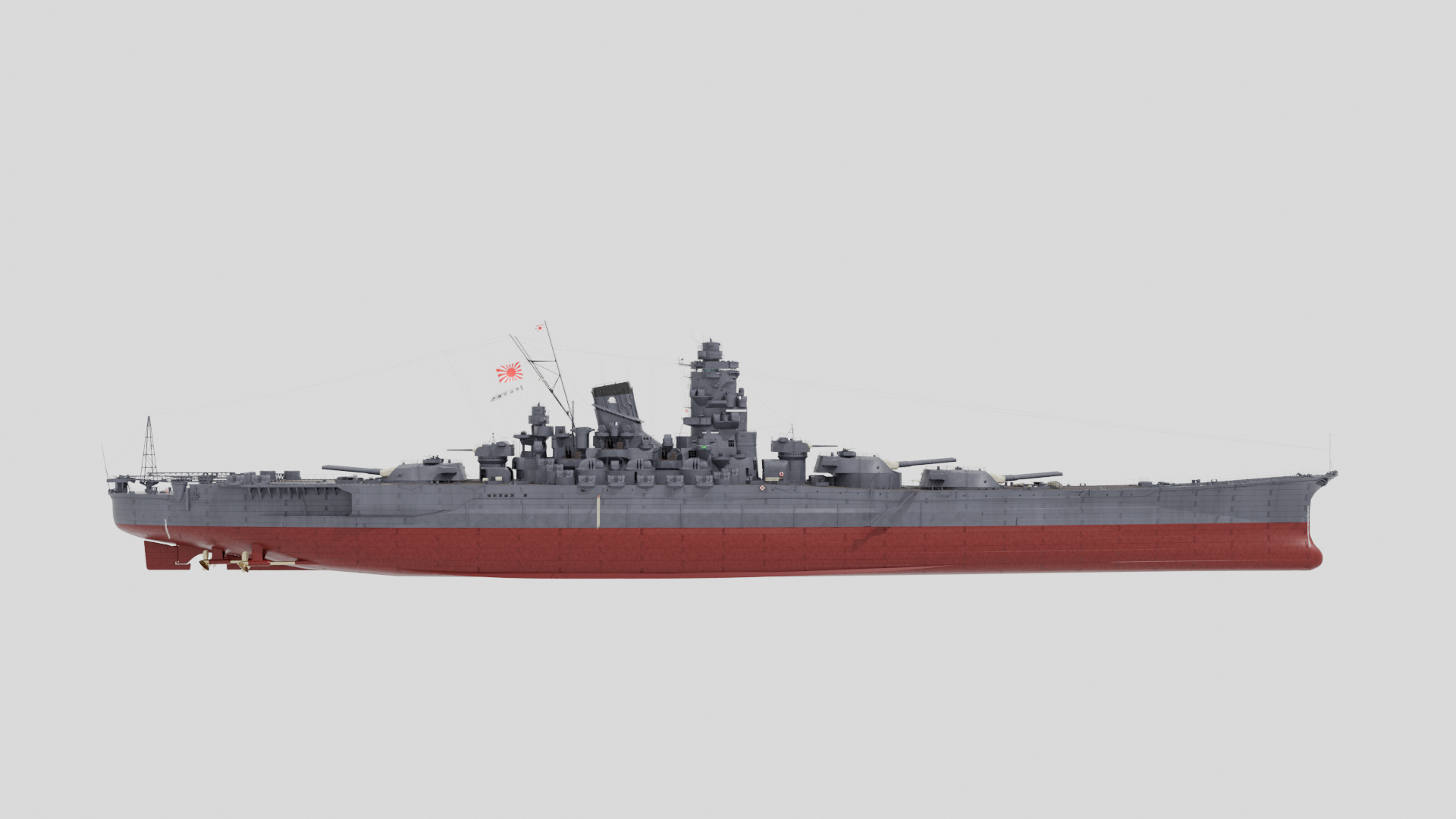
This is a high-resolution 3D model of the Japanese Battleship Yamato, representing her final 1945 configuration. Meticulously recreated from historical Japanese drawings and reference materials. Features an exceptionally detailed full bridge interior with instruments, as well as a recreated crew quarters section. Total 5,855,378 triangles.
Primarily designed for high-resolution renderings, historical CG recreations, and immersive VR "on-board" experiences. Due to its high polygon count, this model is likely too heavy for most real-time game engines but is well-suited for stills, and virtual tours. The entire model can be easily manipulated via a single top-level parent object.
Modeling & Software:
Created and optimized in Blender [????Blender?????] , with previews rendered in Cycles. The model is hierarchically organized with parented components (hull, turrets, gun barrels, etc.) and correctly set pivot points. This allows for animation of fire control systems, turrets, and anti-aircraft guns by rotating objects, without requiring bones.
Texturing & Materials:
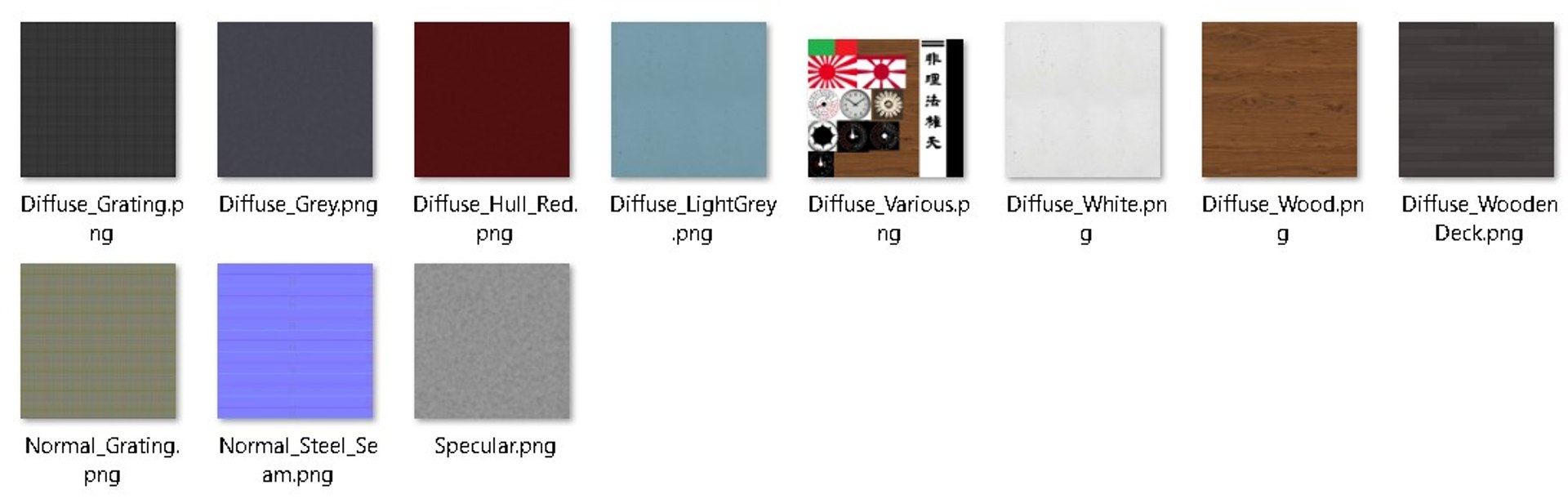
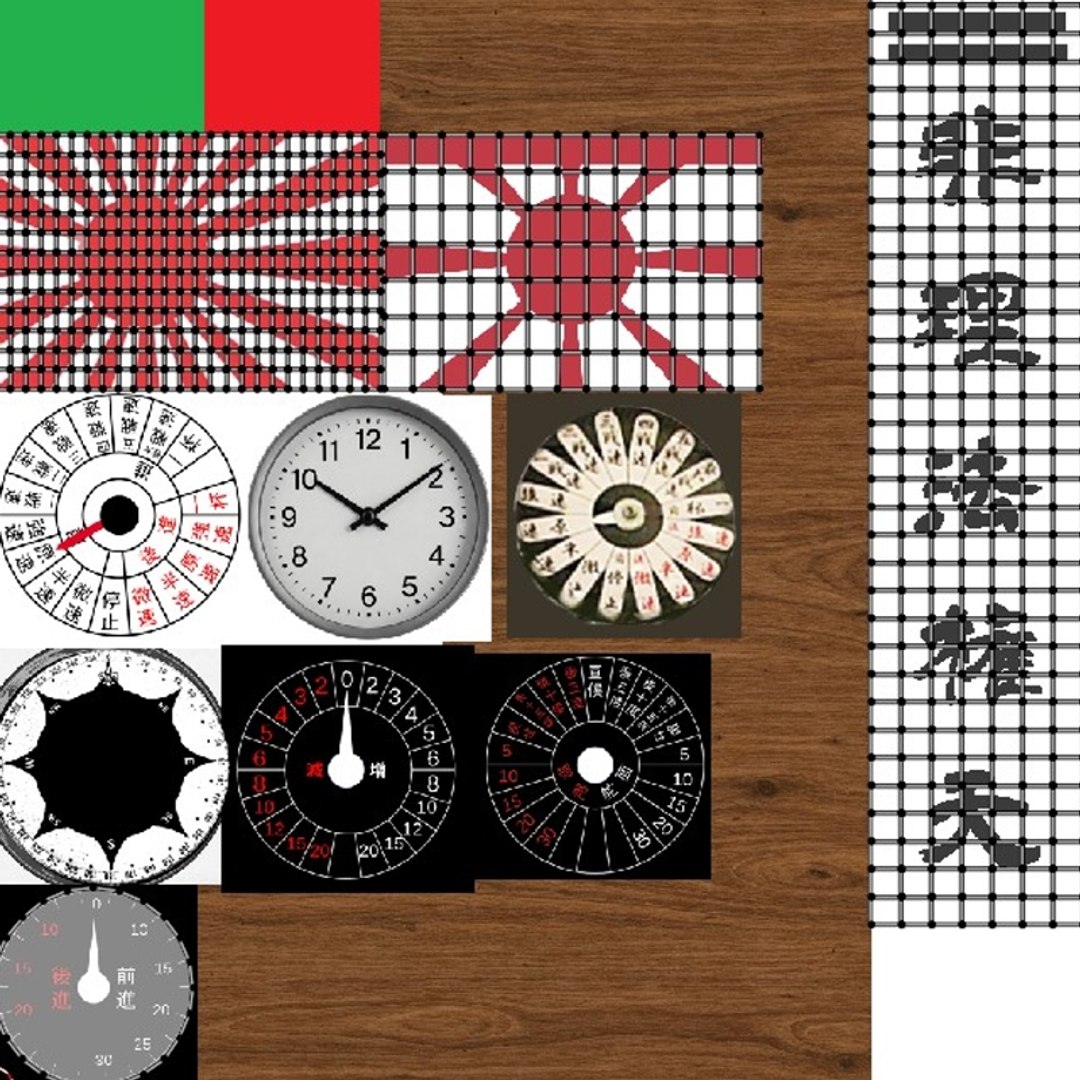
UV mapped for texturing. Most large surfaces utilize tiling/looping textures (1024x1024 PNG) to efficiently express material quality and surface imperfections. Unique UV layouts are applied to details like instruments, flags, and text markings. All textures are packed into the .blend file. Materials are set up for the Cycles render engine.
Creator's Note on Historical Accuracy:
As a Japanese creator, this model was built upon extensive research of limited Japanese historical data, including original plans and crucial crew testimonies. Where clear details were unavailable, respectful historical conjecture and artistic interpretation were key to achieving this comprehensive, immersive representation of the exterior and accessible interior spaces.
Included File:
.blend file: