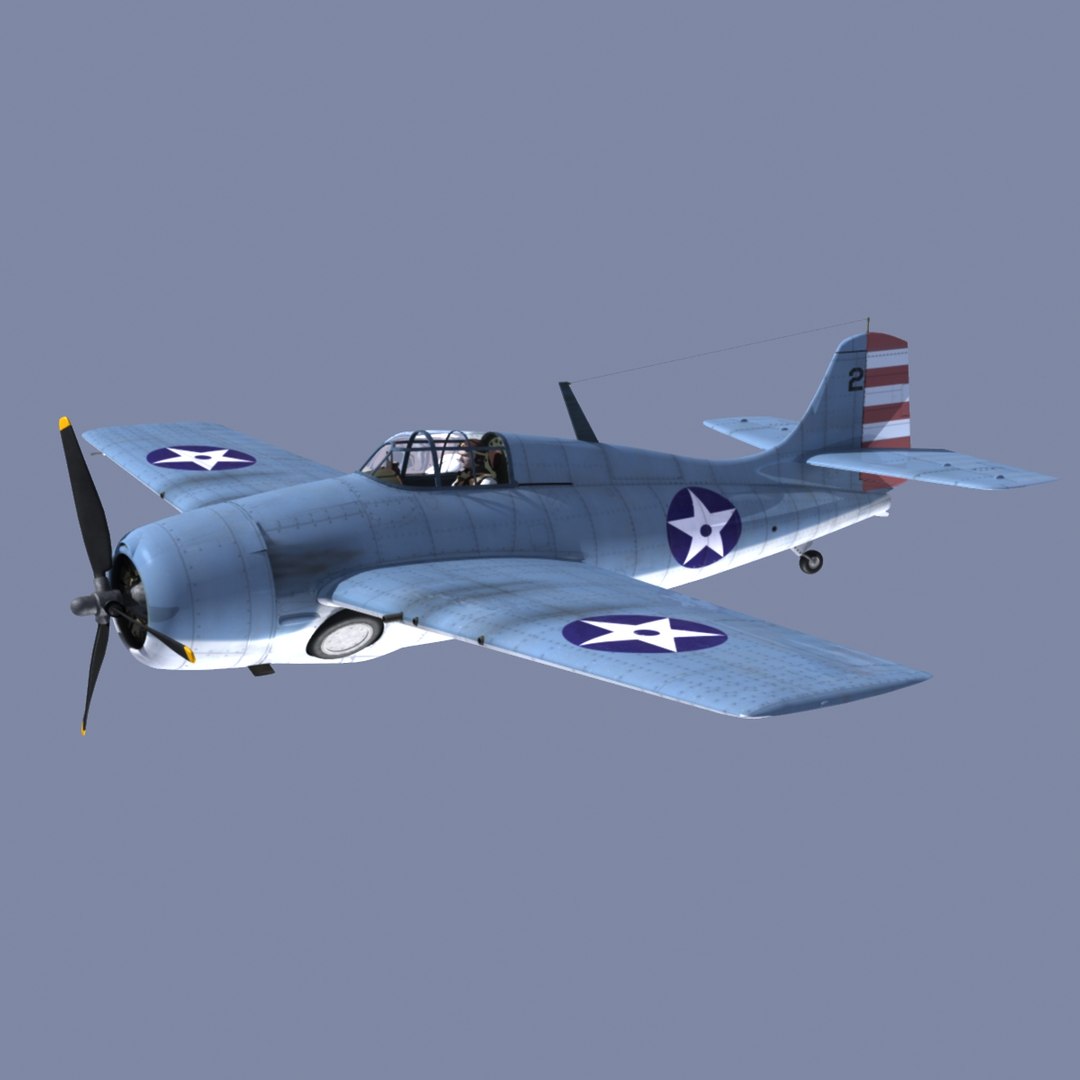
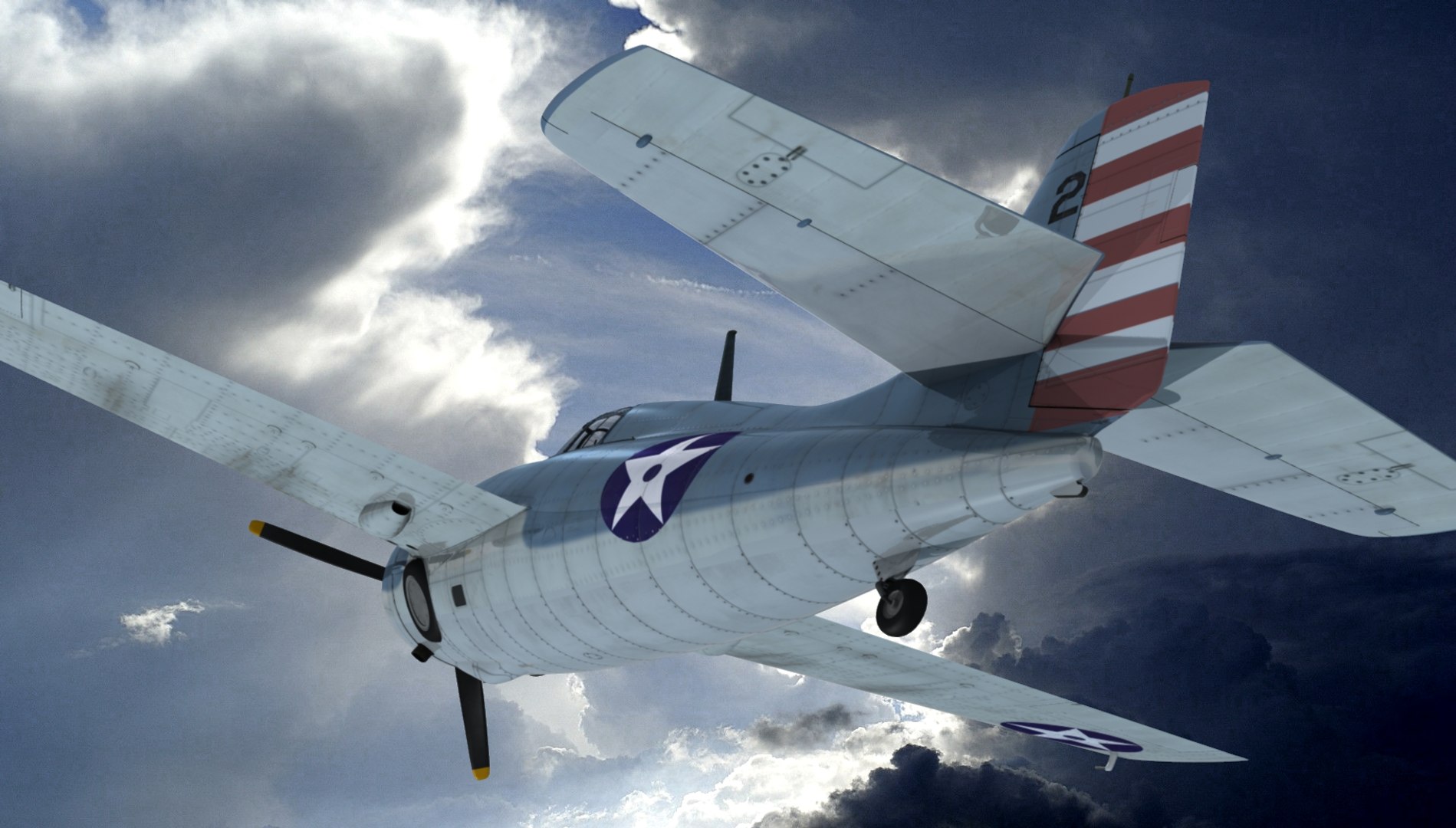
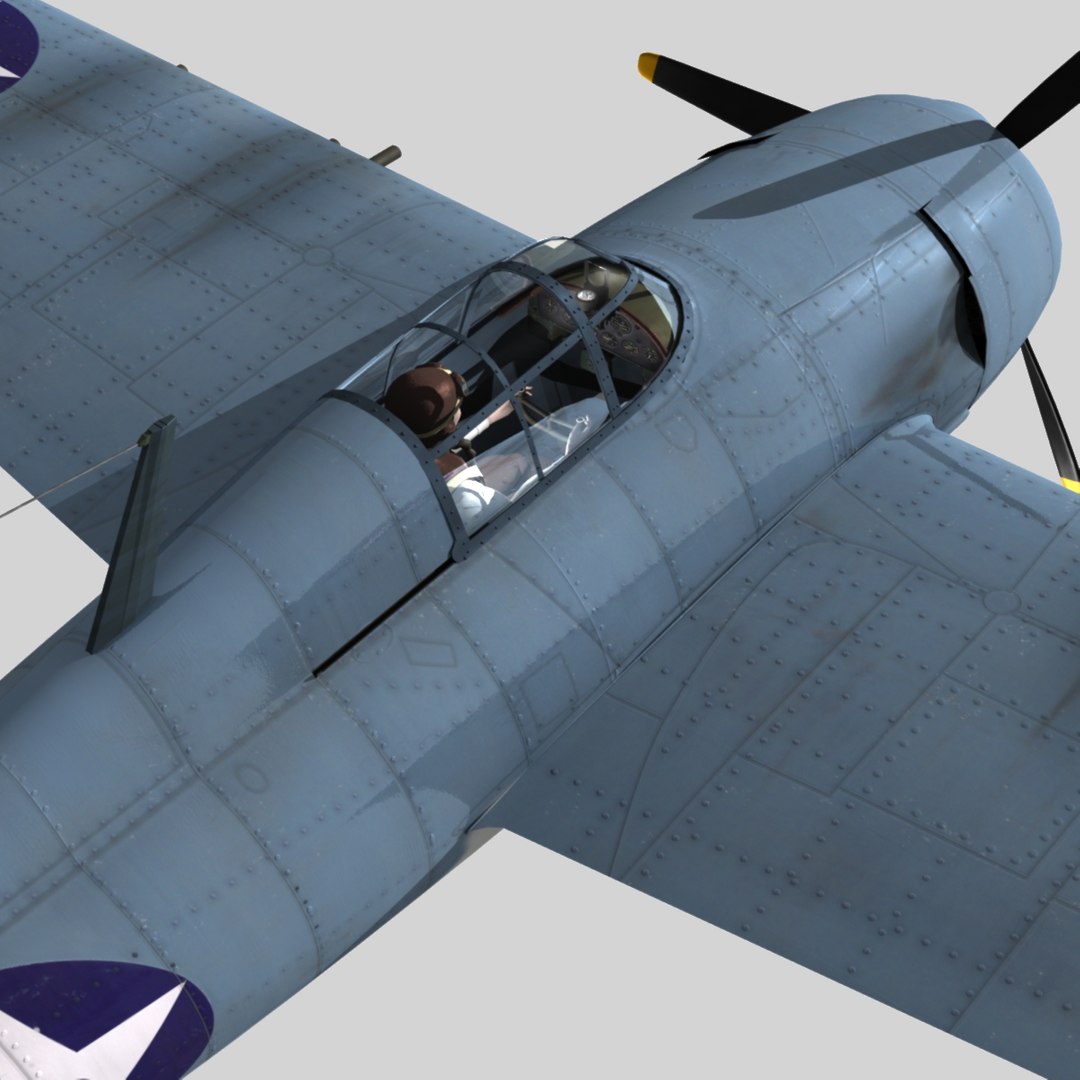
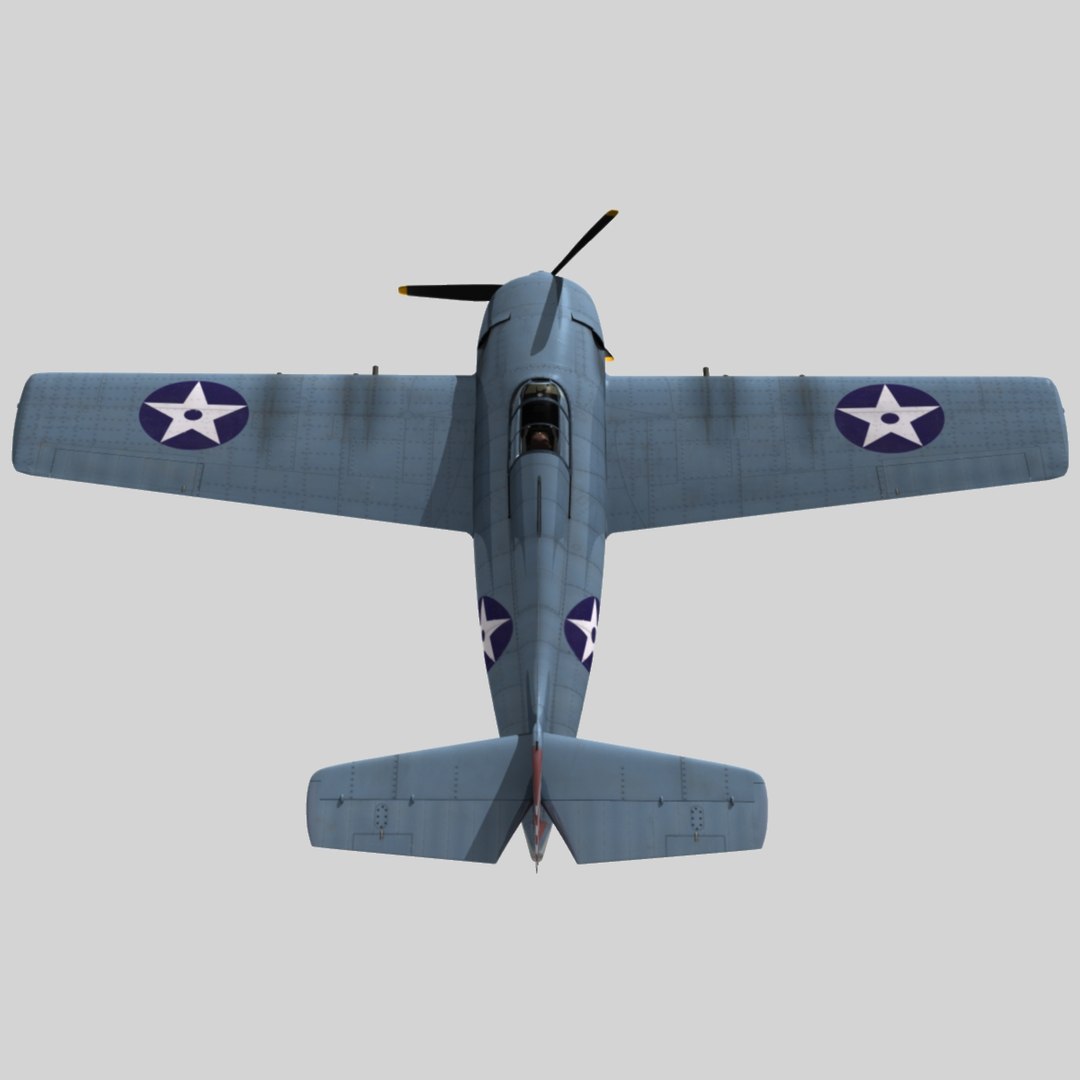
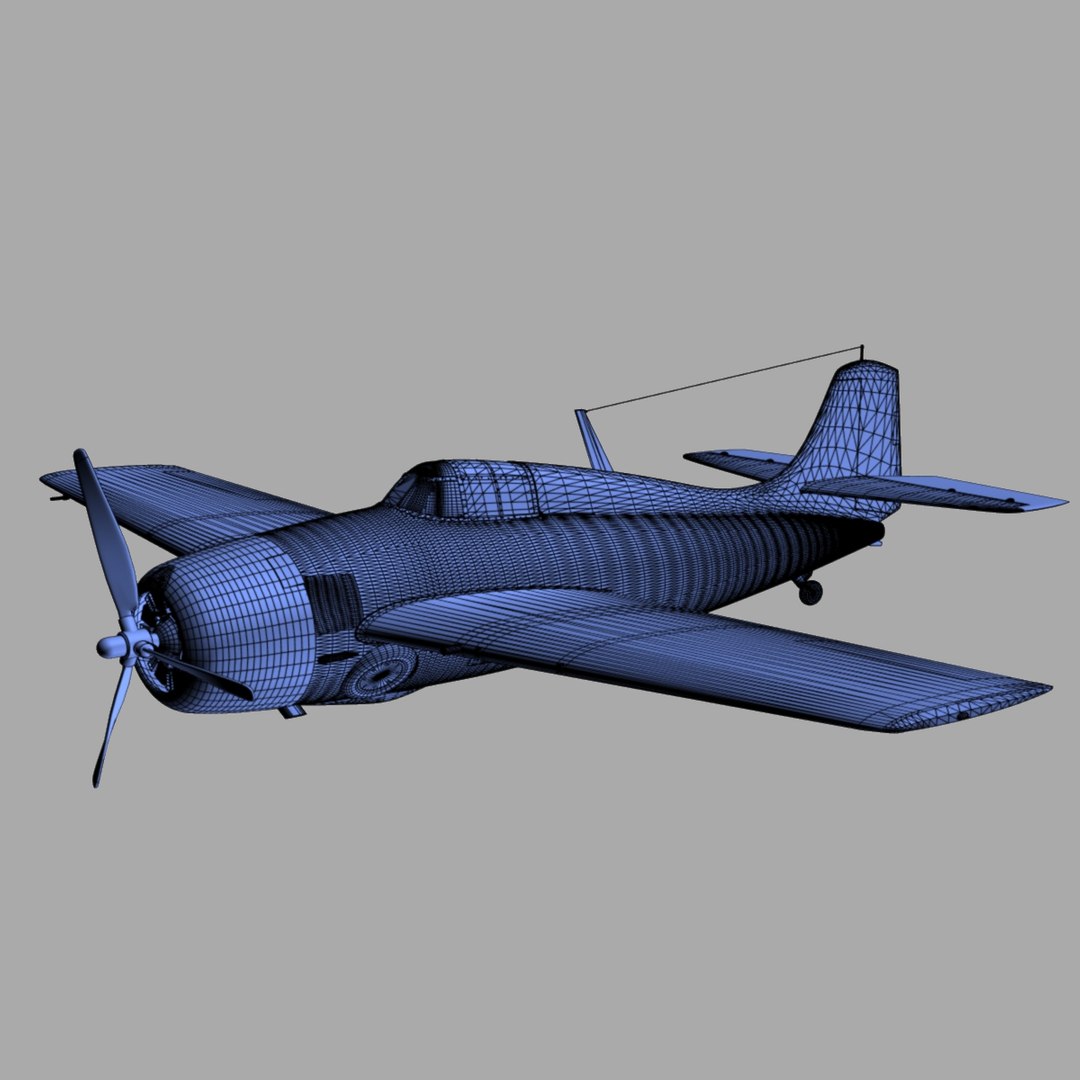
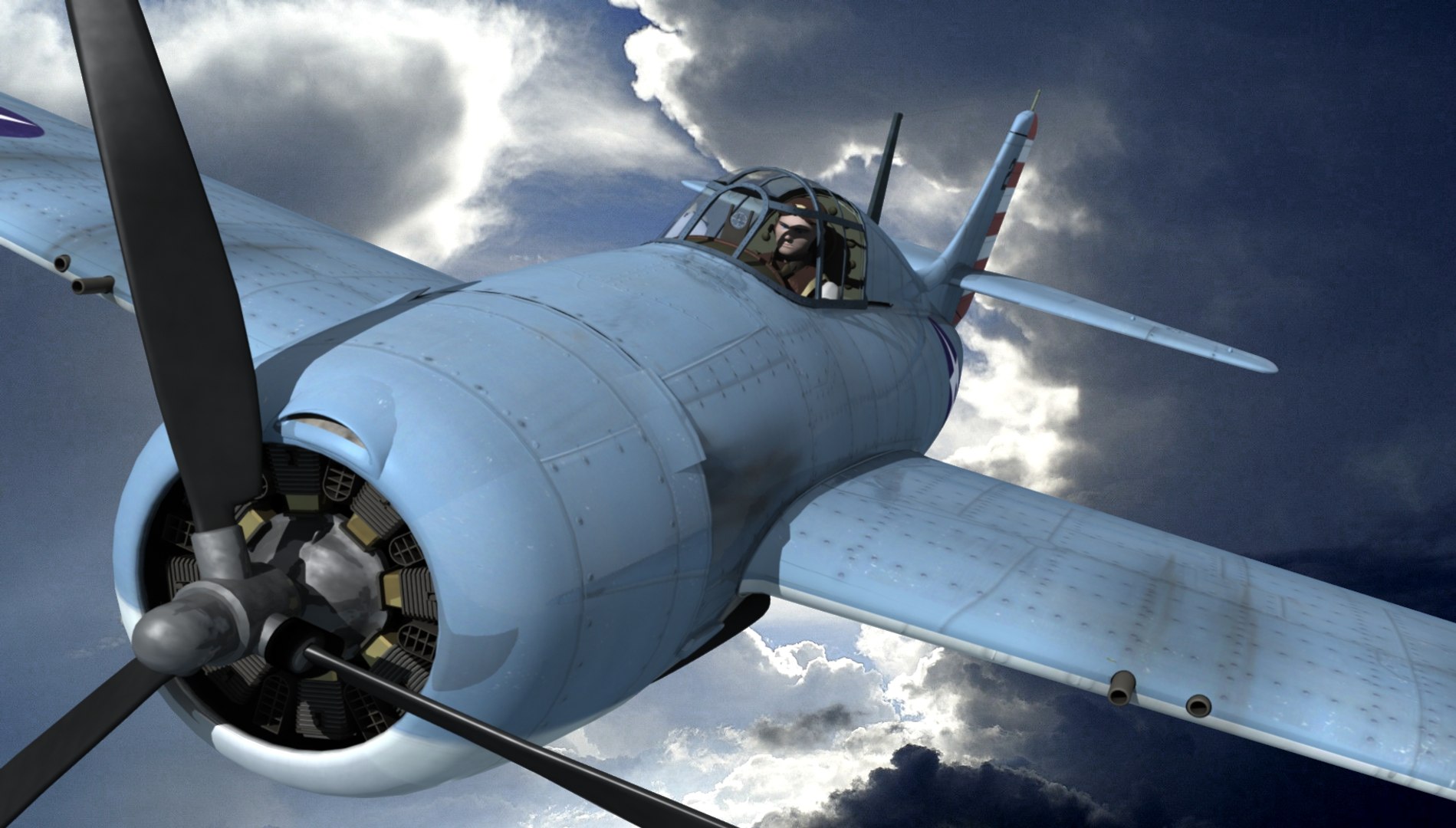
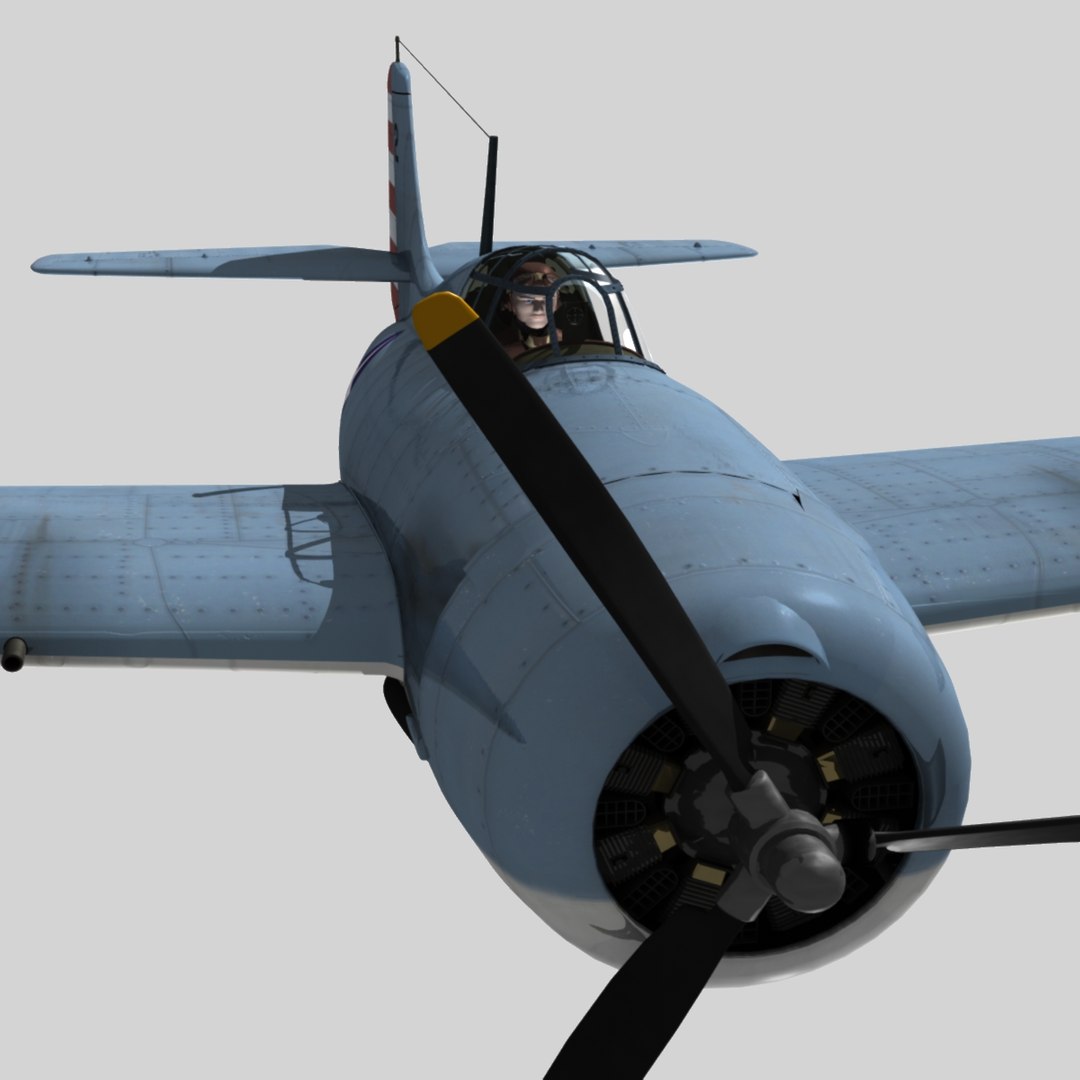
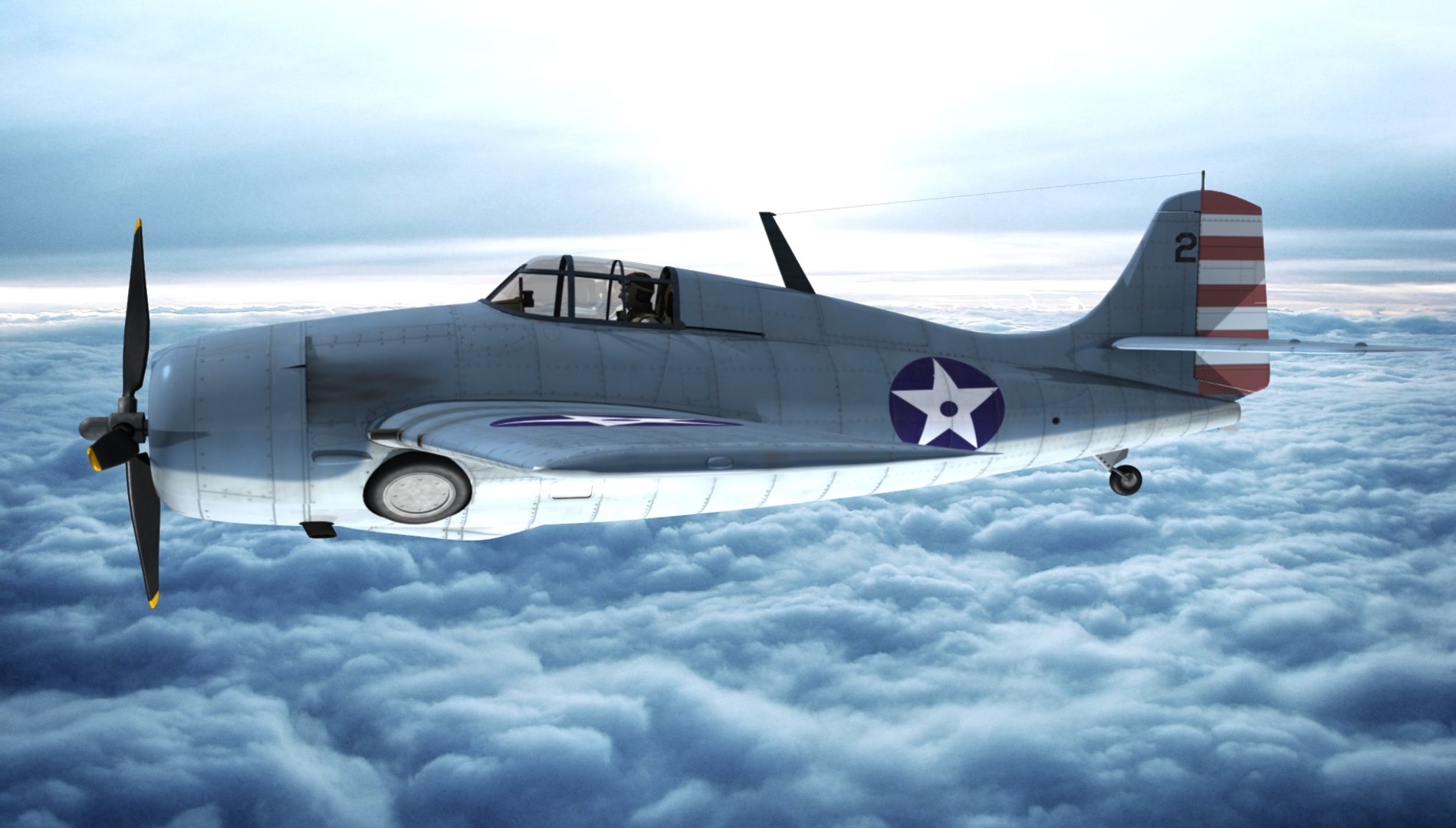
Grumman F4F Wildcat

$95

Licença Padrão | Licença de atualização
Apenas usos editoriais
Formatos (9)
Conversões gratuitas de formatos de arquivo disponíveis
Native | Lightwave 15.3 | Default Scanline 15.3
3ds Max 7.0 | Default Scanline
Softimage 4.0 | Default Scanline
Maya 6.5 | Default Scanline
3D Studio
trueSpace
Other Textures
OBJ
FBX
Outros arquivos
WildCat-Maps.zip
Especificações
Data de publicação February 16, 2008
ID do produto 389920
Polígonos 87,400
Vértices 719,345
Poligonal
Texturas
Materiais
UV mapeado
Manipulado
Animado
Exclusivo TurboSquid

member avatar
3D Tower
25 Produtos | Contributor Desde 2007
Tem perguntas? Converse conosco agora.

Descrição

The F4F-1 began as an unbuilt biplane design entered in a U.S. Navy competition, being beaten by the monoplane Brewster F2A-1 design. This resulted in its complete remodeling into the monoplane XF4F-2.[1] This was evaluated against the Buffalo, but although the XF4F-2 was marginally faster, the Buffalo was otherwise superior and was chosen for production.[1]. Grumman"s prototype was then rebuilt as the XF4F-3 with new wings and tail and a supercharged version of the Pratt & Whitney R-1830 "Twin Wasp" radial engine.[1][2] Testing of the XF4F-3 led to an order for F4F-3 production models, the first of which was completed in February 1940. France also ordered the type, powered by Wright R-1820 "Cyclone 9" radial engines, but France fell before they could be delivered and they ultimately went to the British Royal Navy, which called them "Martlet I"s. Both the British aircraft and the U.S. Navy"s F4F-3 with an armament of four .50 caliber Browning machine guns, joined active units in 1940.[2]

All versions of the Wildcat used fuselage mounted, hand-cranked landing gear with a relatively narrow track, making landing accidents, where the landing gear were not fully locked into place, distressingly common.[3] This unusual main landing gear design was originally designed by Grover Loening, for his firm"s aircraft in the 1920s, and as Leroy Grumman had worked for Loening before starting up his own company, it was readily licensed to Grumman and was used earlier on all of Grumman"s fighter biplanes (from the FF-1 through the F3F) of the 1930s and on the J2F Duck amphibious biplane.[4]

The name "Wildcat" was officially adopted on 1 October 1941.

Selecione Licença Aprimorada

  • $10,000 em Proteção Legal (Indenização)
  • Proteção jurídica ilimitada (indenização)
  • Renúncia à medida cautelar
  • Direitos de modelo atribuíveis
  • $1,000,000 em Proteção Legal (Indenização)
  • Renúncia à medida cautelar
  • Direitos de modelo atribuíveis
  • $250,000 em Proteção Legal (Indenização)
  • Direitos de modelo atribuíveis
Saiba mais sobre níveis de licença aprimorados ou entre em contato conosco pelo e-mail enterprise@turbosquid.com. Já é cliente corporativo da Shutterstock? Entre em contato com seu agente de suporte de vendas da Shutterstock para conversar sobre a adição do 3D.

About Conversion Requests

To submit a conversion request for a purchased asset, please complete our Conversion Request Form.

If you have not yet purchased a model, please review our Documentation about Conversions to learn about what limitations you may encounter with a conversion.

For any additional questions about a model’s suitability for conversion, please contact TurboSquid Support.

Carregando...