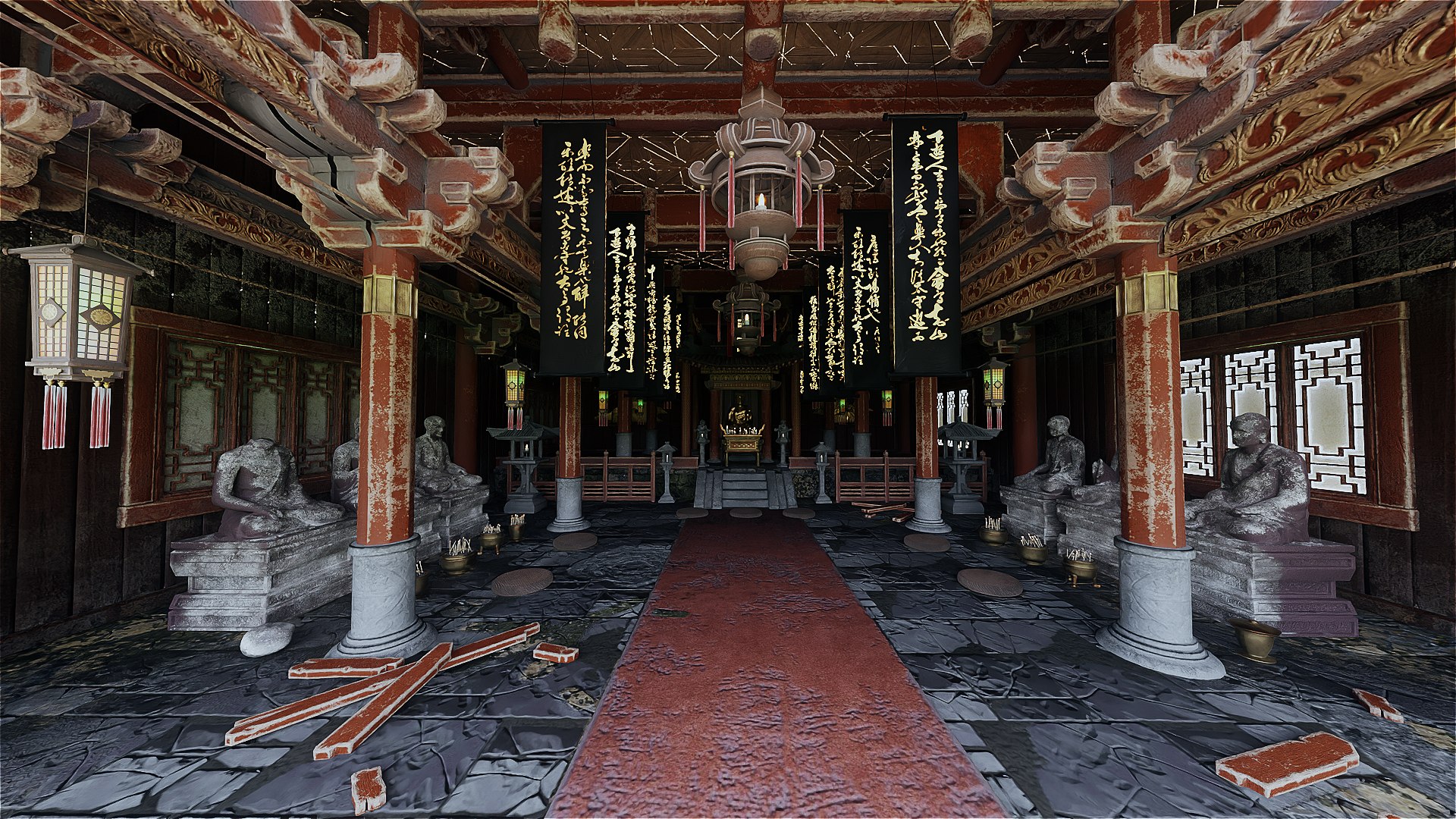
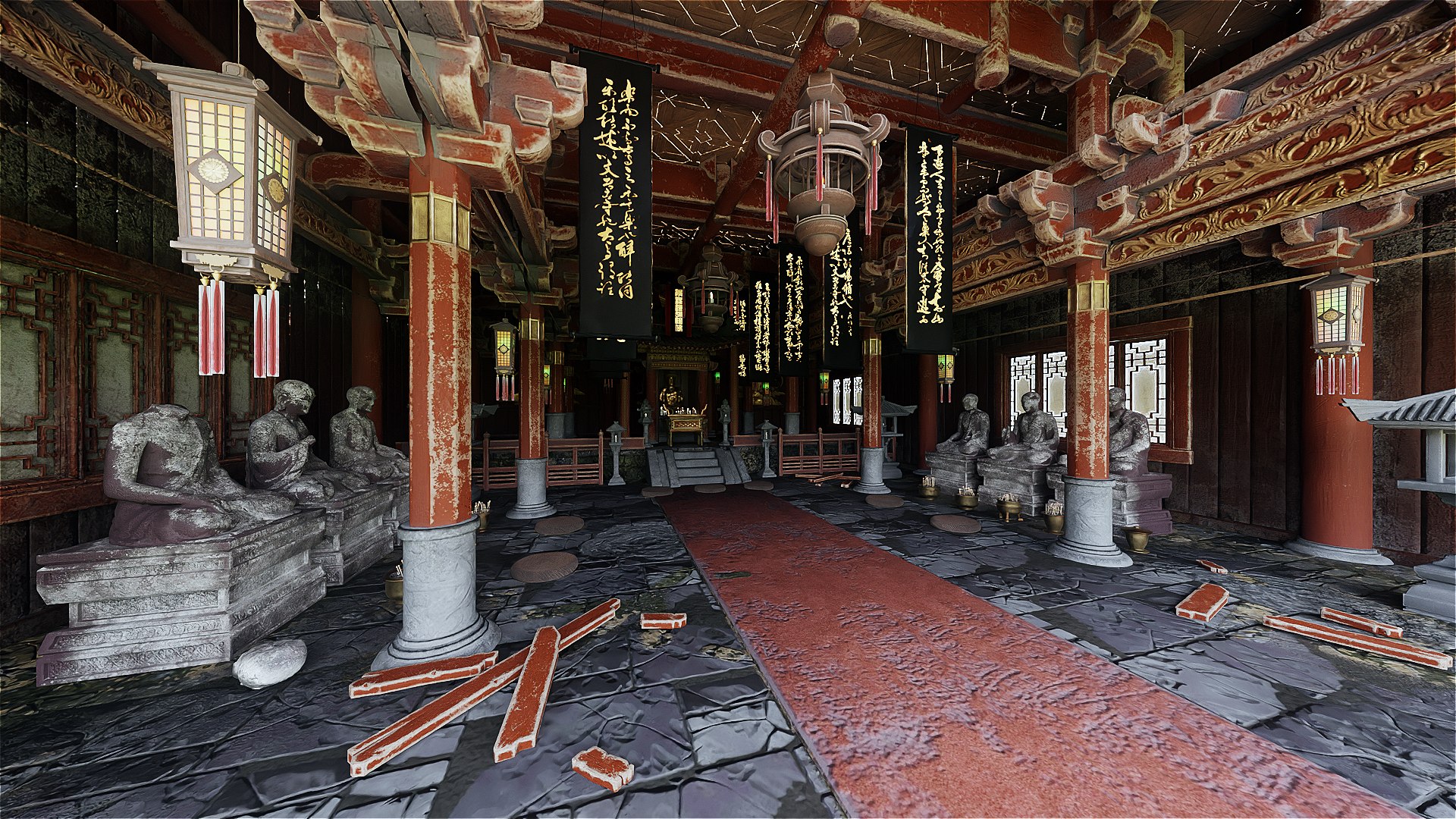
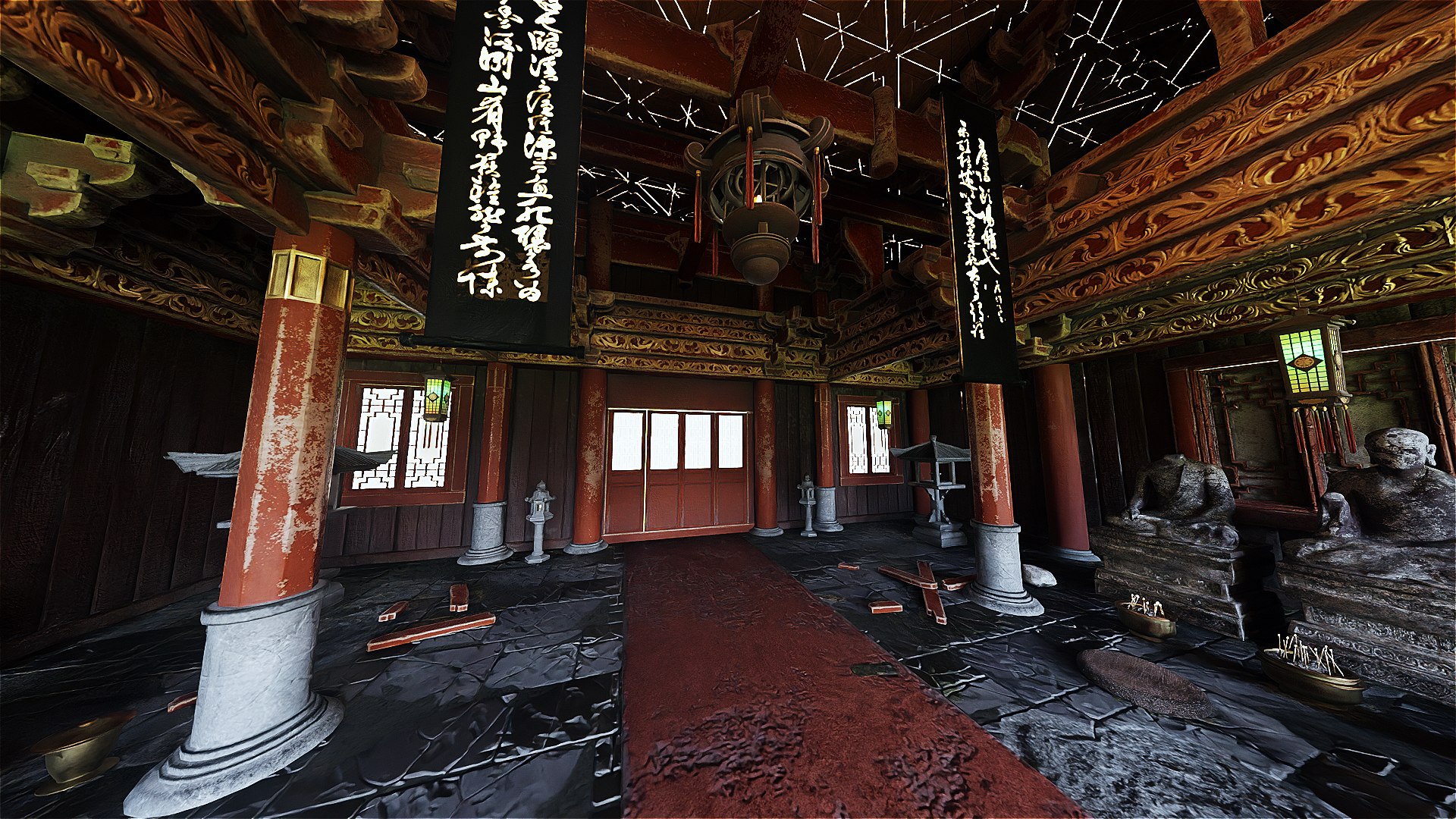
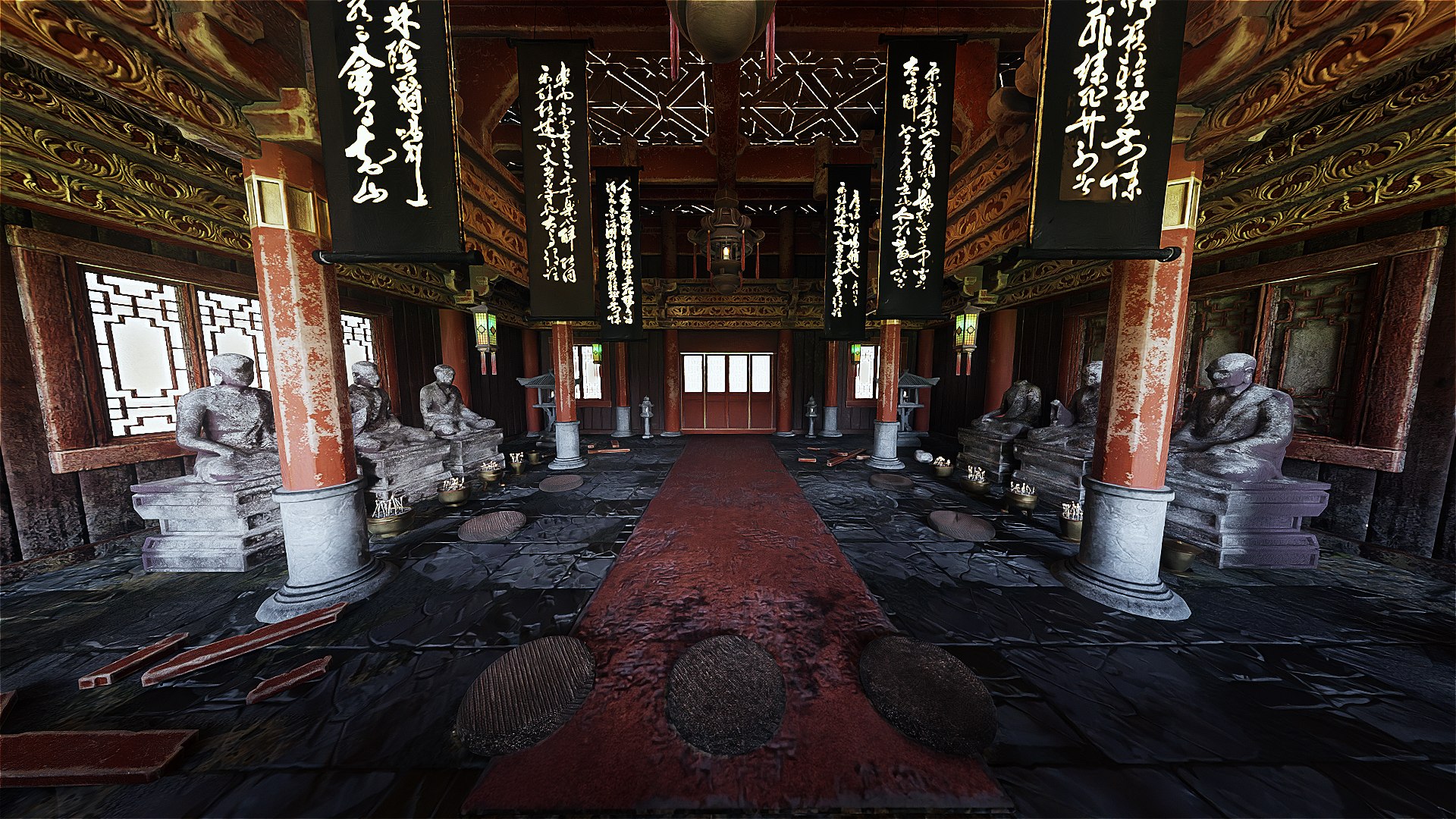
Nestled among the embrace of mountains, an ancient temple stands quietly, as if seamlessly integrated with heaven and earth. The temple's roof is covered with bluish-gray tiles, its eaves elegantly upturned and adorned with carvings of auspicious clouds and mythical beasts, symbolizing good fortune and protection. The vermilion main gate is solemn and heavy, with a horizontal plaque inscribed in bold, golden characters hanging above it, exuding an aura of grandeur.
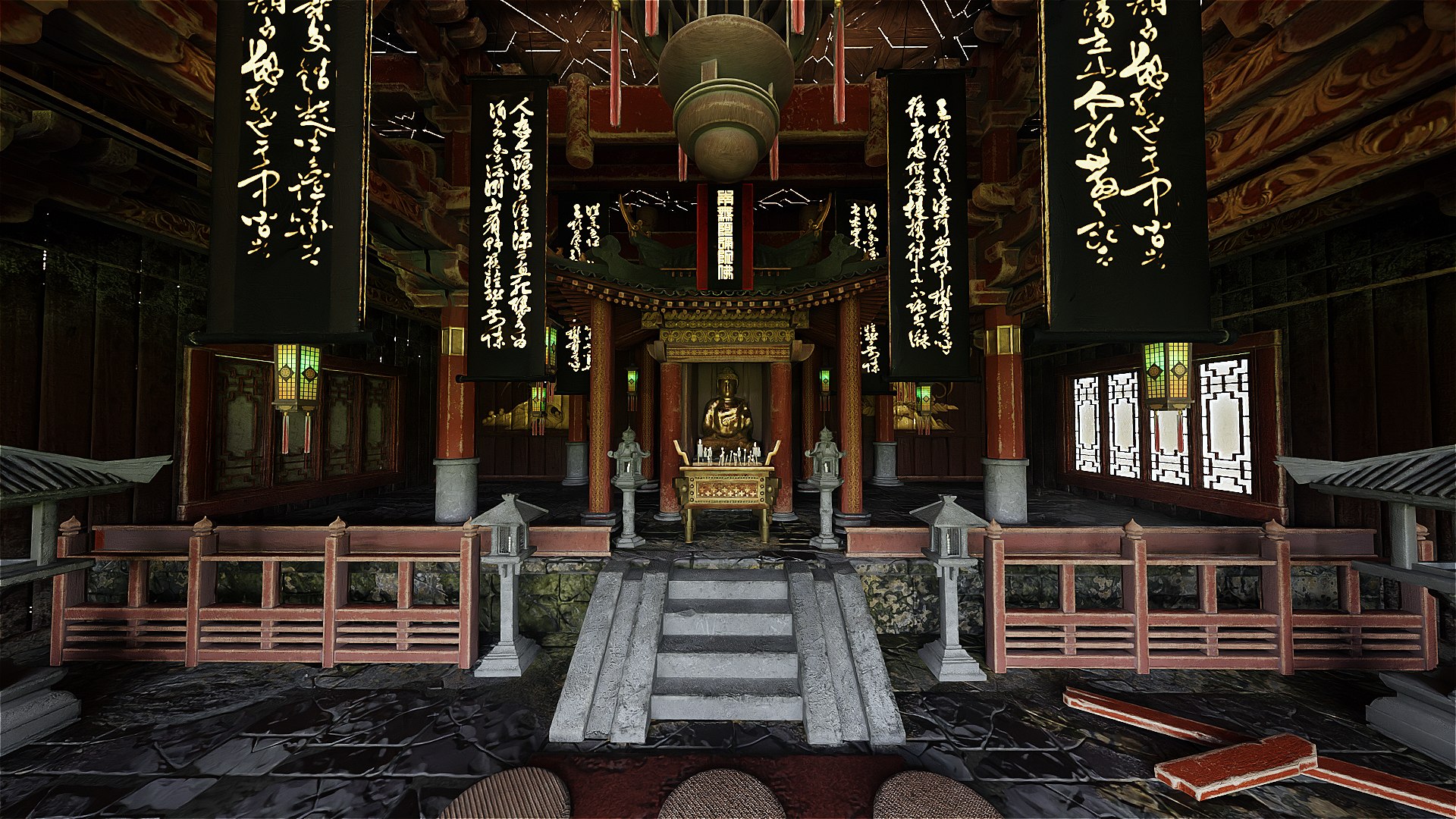
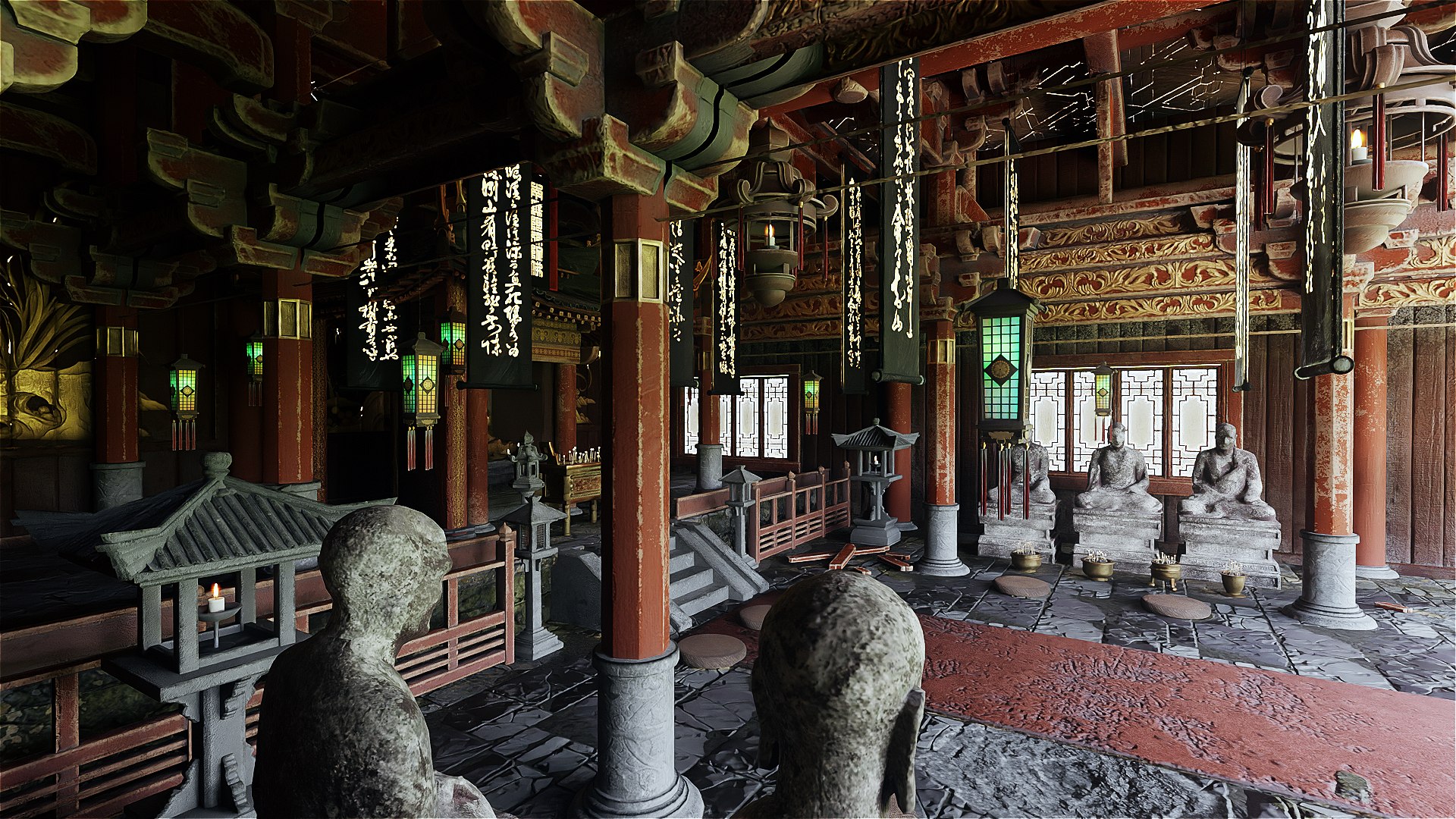
Upon entering the temple, a faint scent of sandalwood greets the senses, lingering in the air and calming the mind. In the center of the main hall sits a dignified and solemn statue of a deity, its expression both benevolent and majestic, as if silently observing every worshipper who comes to pay their respects. On the altar before the statue, fresh fruits, candles, and bronze incense burners are arranged, with wisps of smoke rising and intertwining with the dim light inside the hall, creating a mystical and sacred atmosphere.
The temple walls are adorned with exquisite murals depicting ancient myths and religious tales. Though the colors have faded with time, the grandeur of the past can still be felt. In the courtyard, several ancient trees tower skyward, their lush branches and leaves providing shade. Beneath them, stone tables are engraved with ancient inscriptions, recording the temple's history and beliefs. Occasionally, a gentle breeze passes by, causing the wind chimes hanging from the eaves to emit a crisp, melodic sound, as if whispering tales of a thousand years.
This temple is a sanctuary for the soul, where people come to pray for peace, bountiful harvests, or to honor their ancestors. Devotees light incense and kneel in reverence, placing their hopes for the future and their respect for the past within these walls. More than just a structure, this temple is a witness to history and a vessel of cultural heritage.