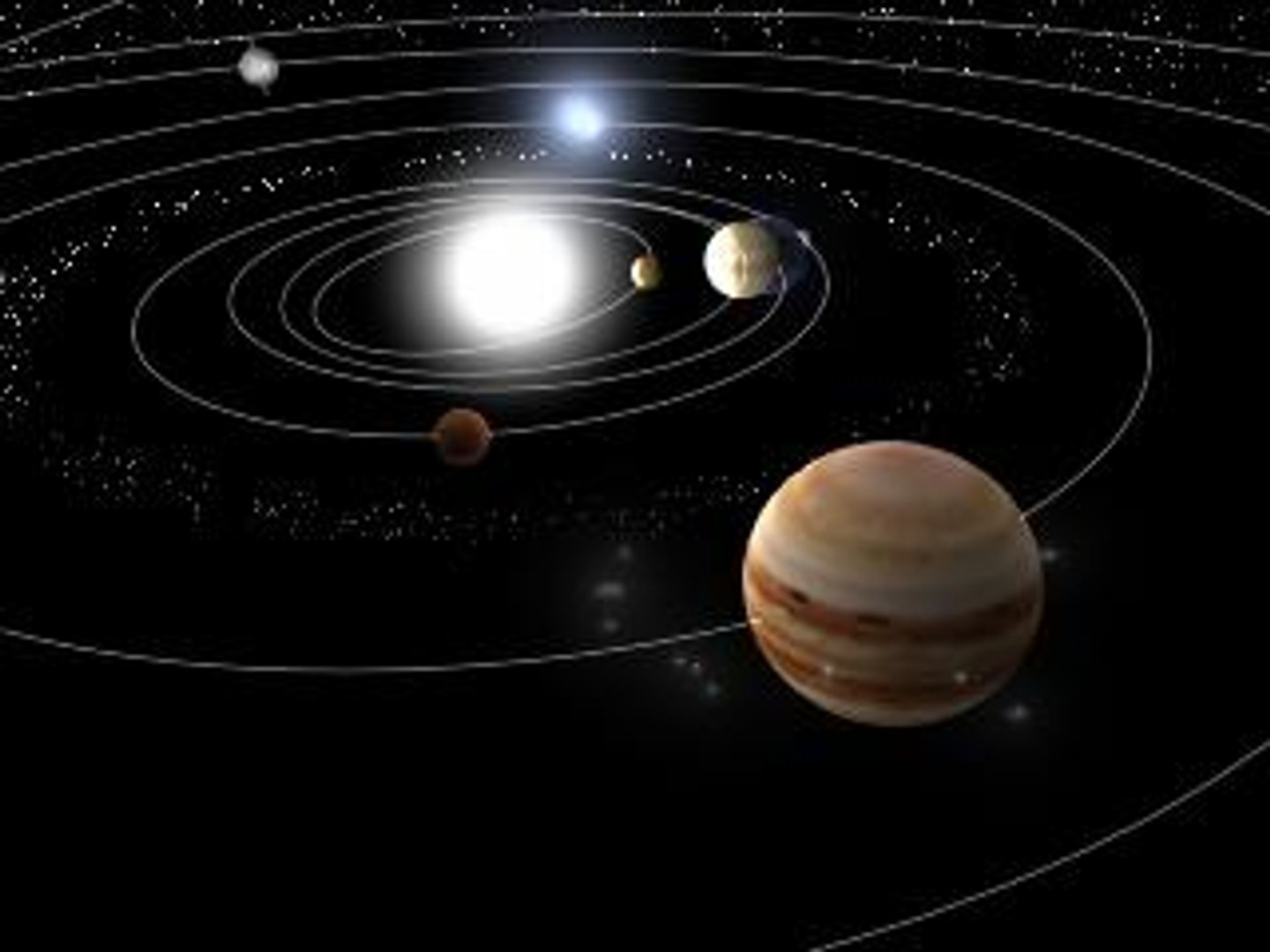
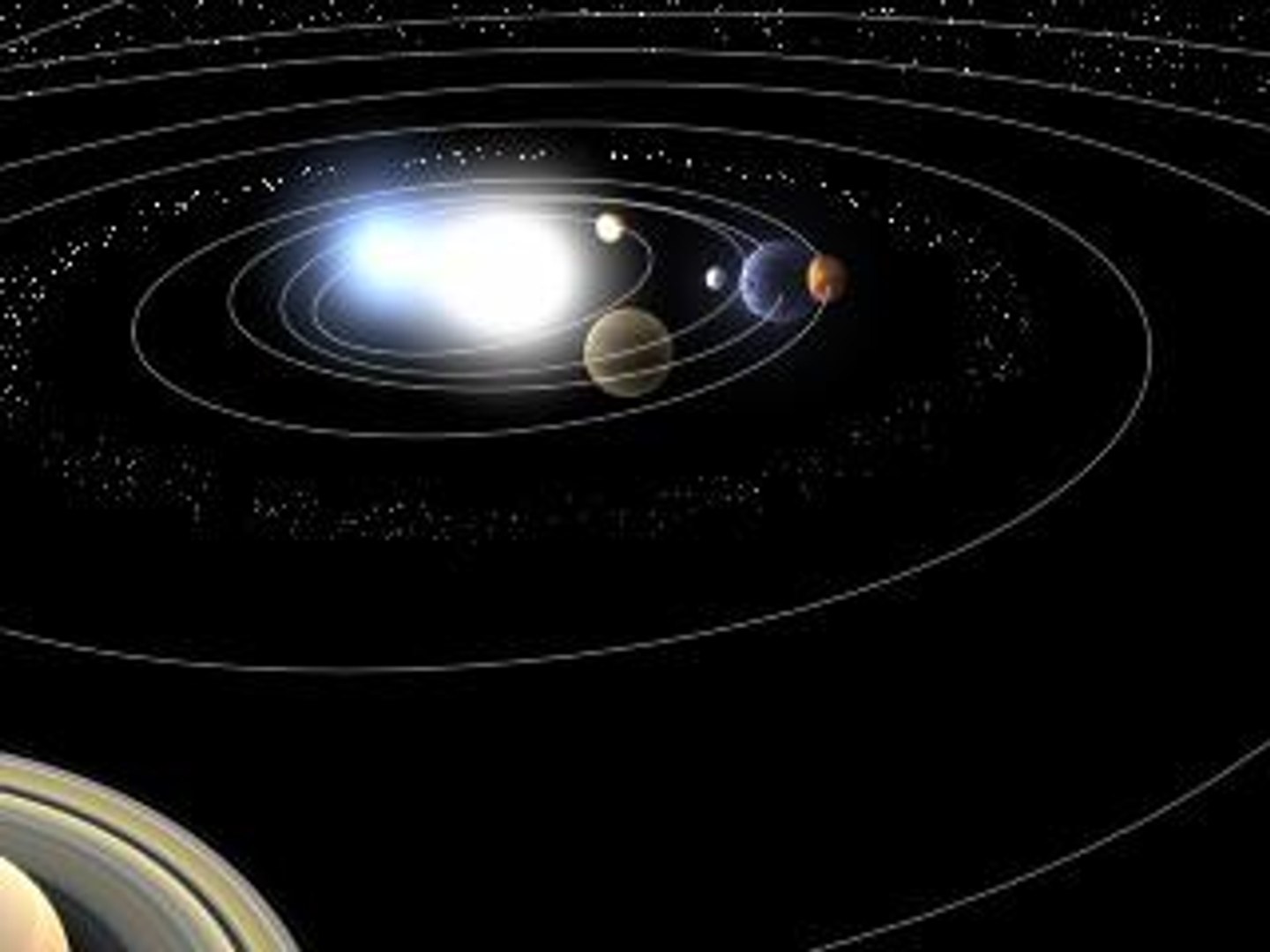
A complete model of the solar system with the planets distributed on an exponential scale. This decreases the distance in between the planets so they can all fit into a single frame, but maintains the proportions. The orbits of the planets are all controled by mel scripts. The starting positions of the planets are calculated for May 14, 1935. The sizes of the planets are not to true scale, the planets of the outer solar system are 2000 times their true size, the inner solar system planets are 10,000 times their true size, and Pluto is 30,000 times its true size. This is done for the sake of visibility, but can easily be adjusted. All the moons of Jupiter larger than 8km in diameter have been included with the correct orbital period.
In the initial animation included in the scene, the idea was to show a few seconds of a comfortable orbitable rate for Earth (where Pluto barely moves) and then a comfortable orbital rate for Pluto (where the inner solar system flies). To accomplish that, all the orbital scripts are tied to an attribute in the TimeScale object called counter. At a normal rate, counter advances by 1 for each frame. But then to get the speeding up motion that amount is gradually keyed up to a faster rate.
The orbit lines are paintFX that can fade in and fade out. So all of them are controled by a shader called RingsAlphaController. The Color and Transparency are keyed and drive the incandensance and transparency of the paint fx brush being used on them. Basically Color=black, and Trans=white means the rings are visible. The opposite colors means they are not.
Also included is a paintFX asteroid belt and Ort cloud. As well as Halley"s Comet with the correct orbital path and a particle based tail that adjusts direction based on its location relative to the sun.