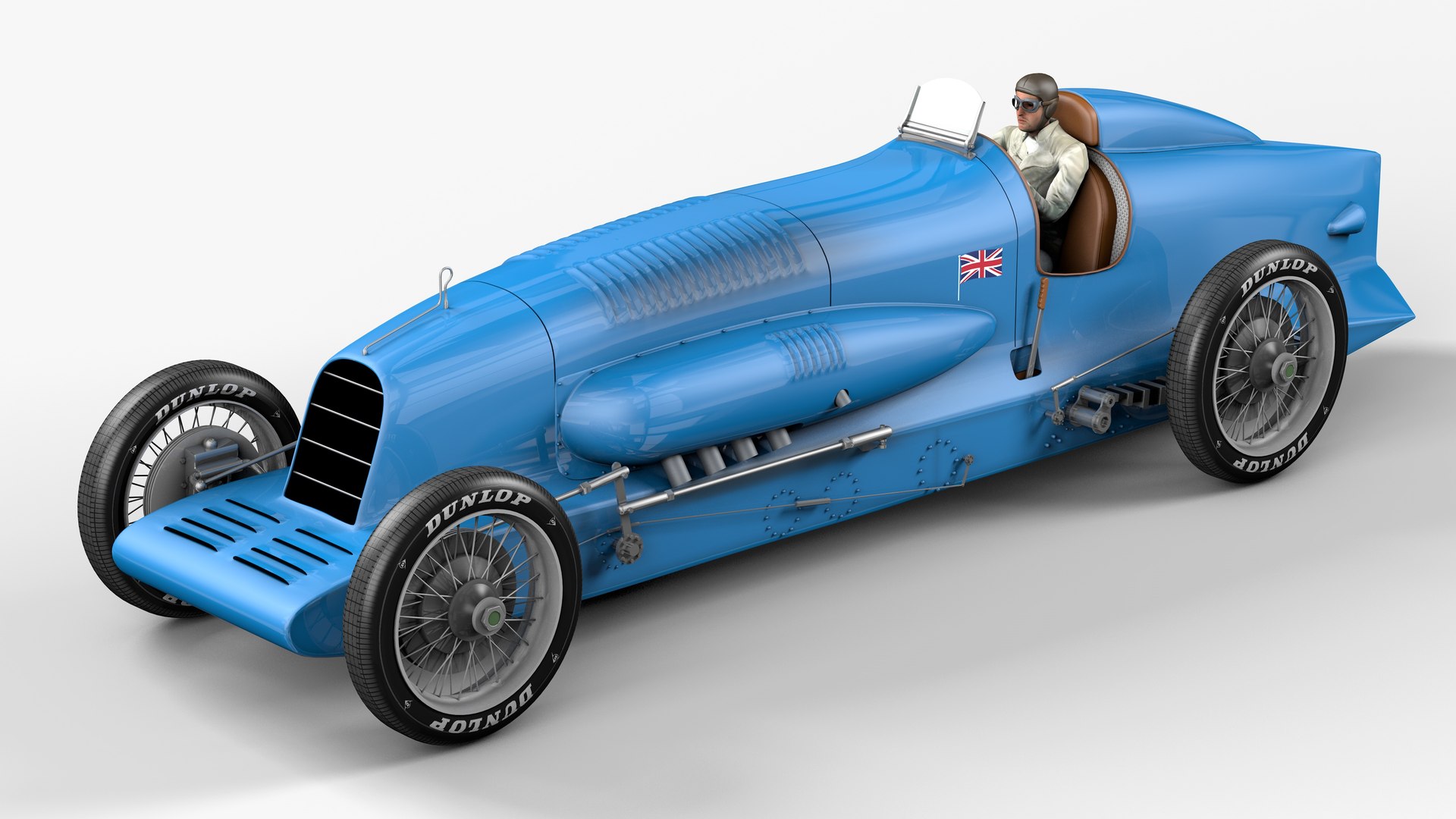
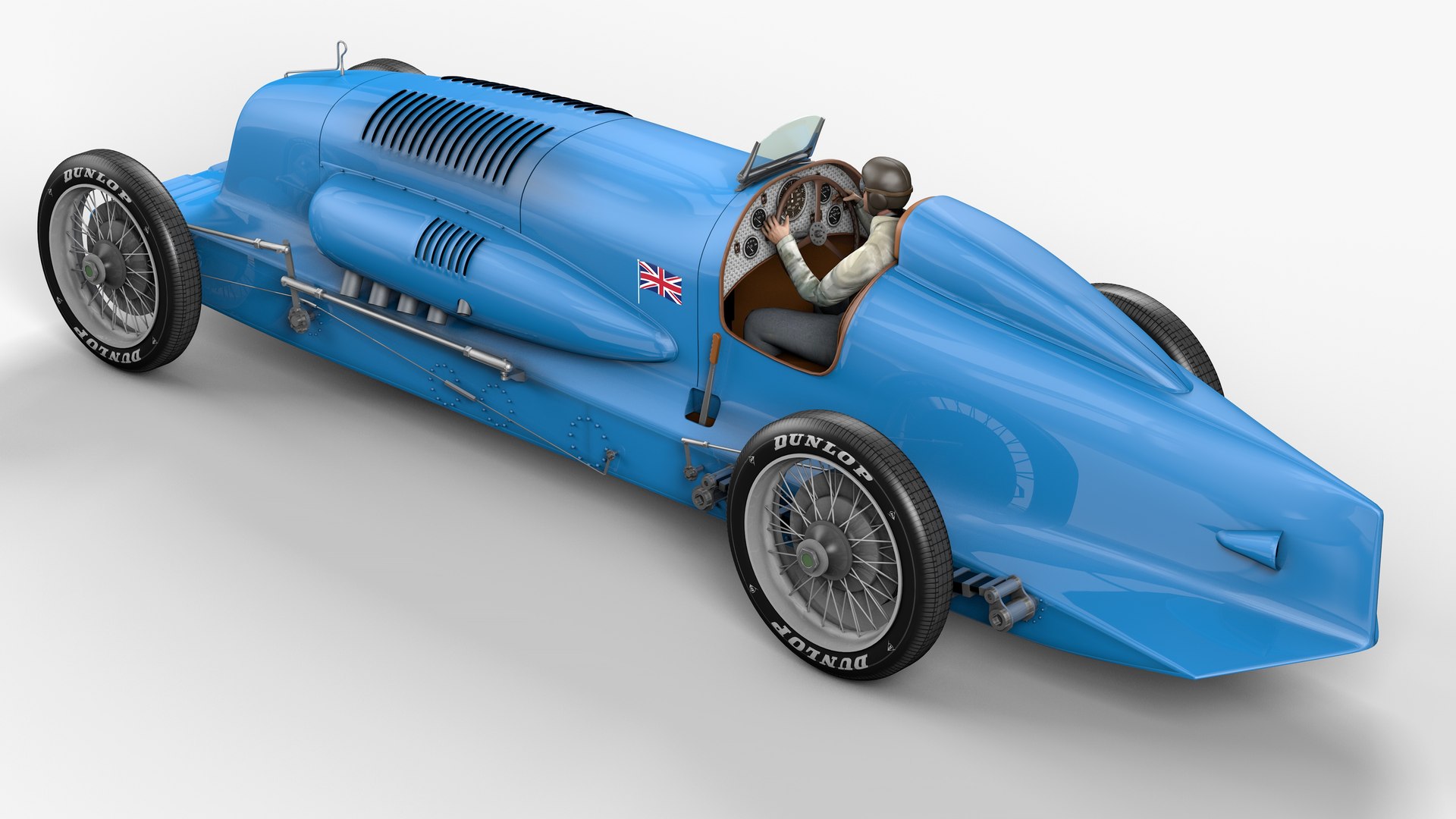
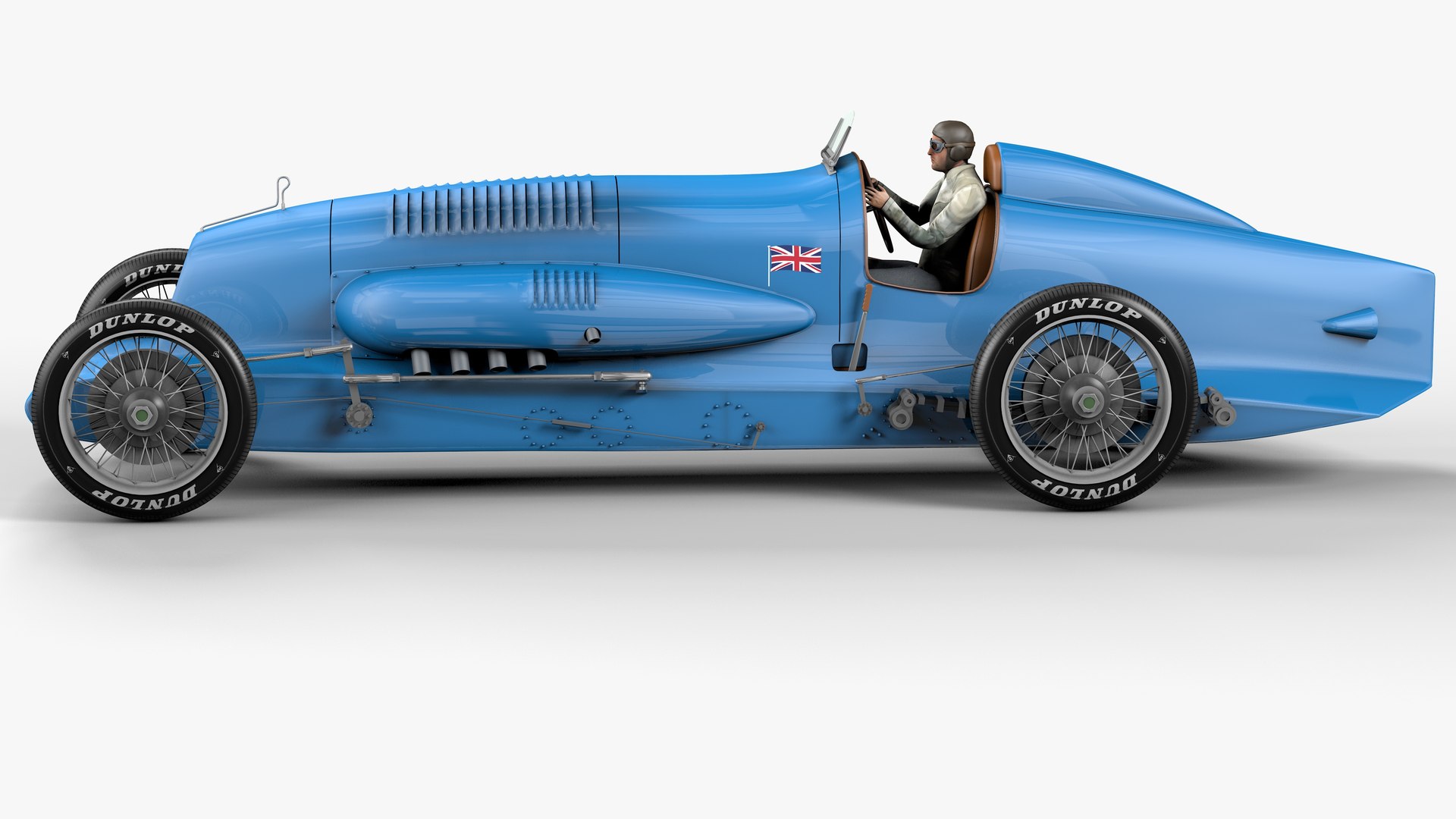
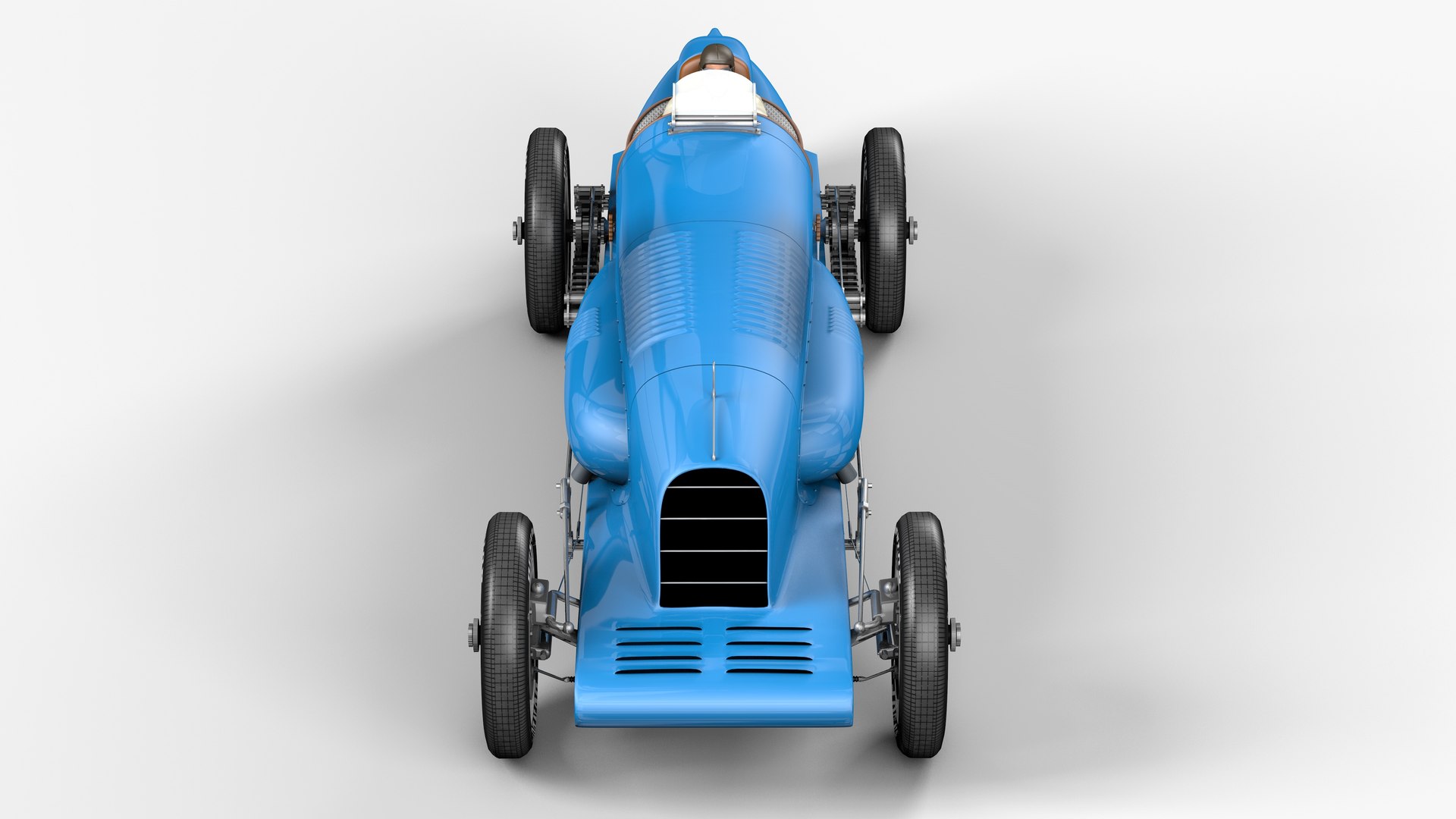
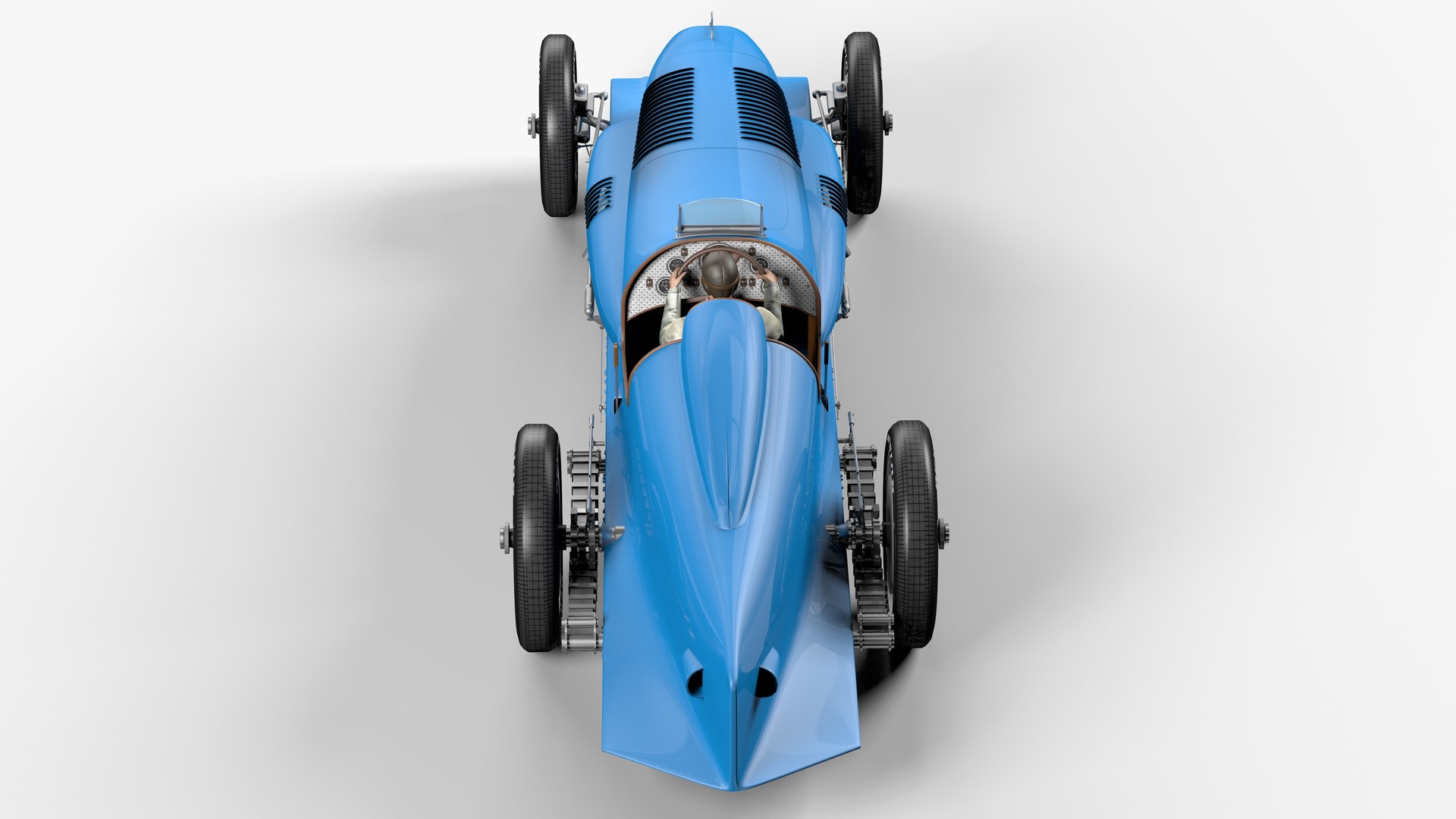
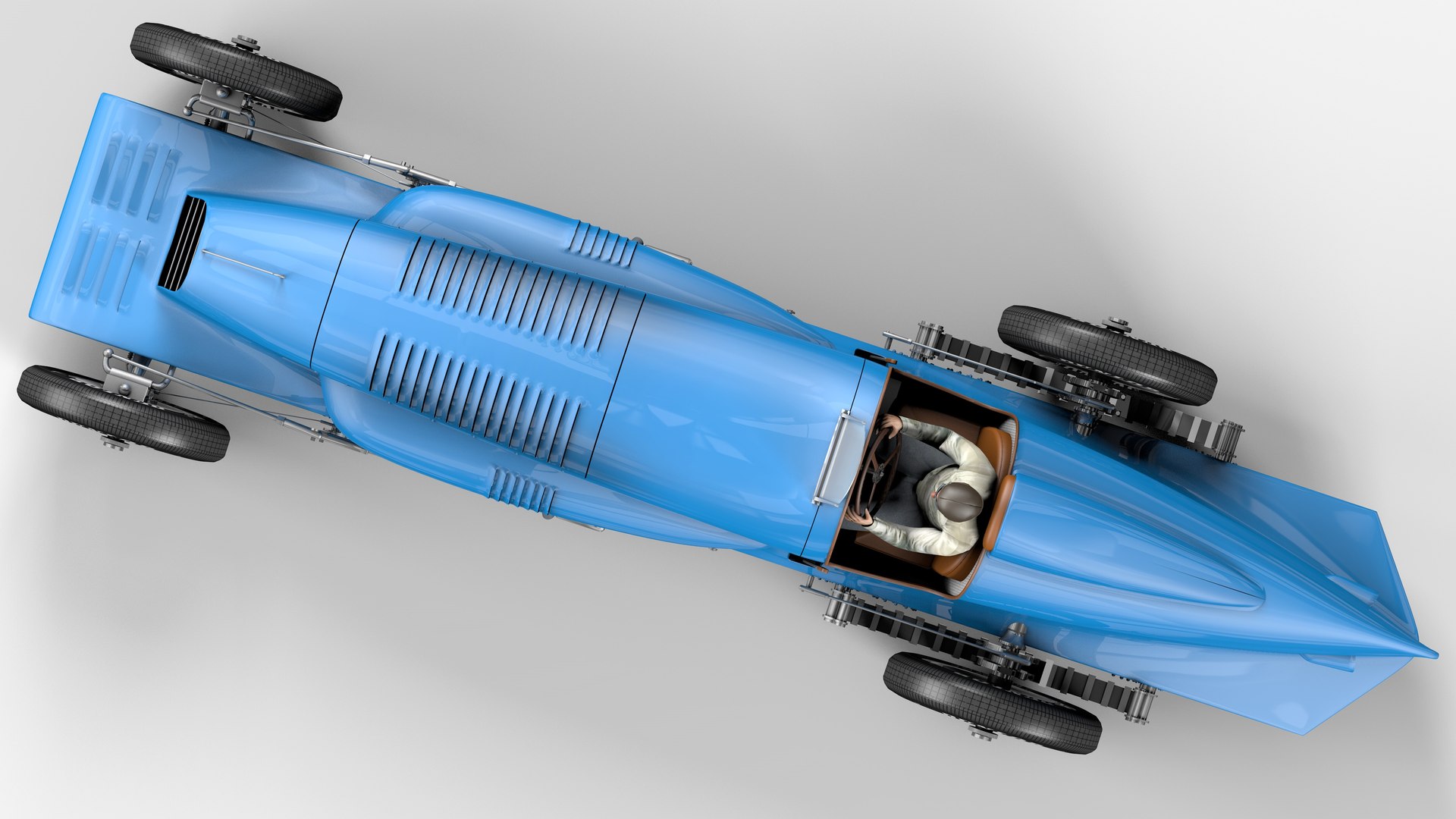
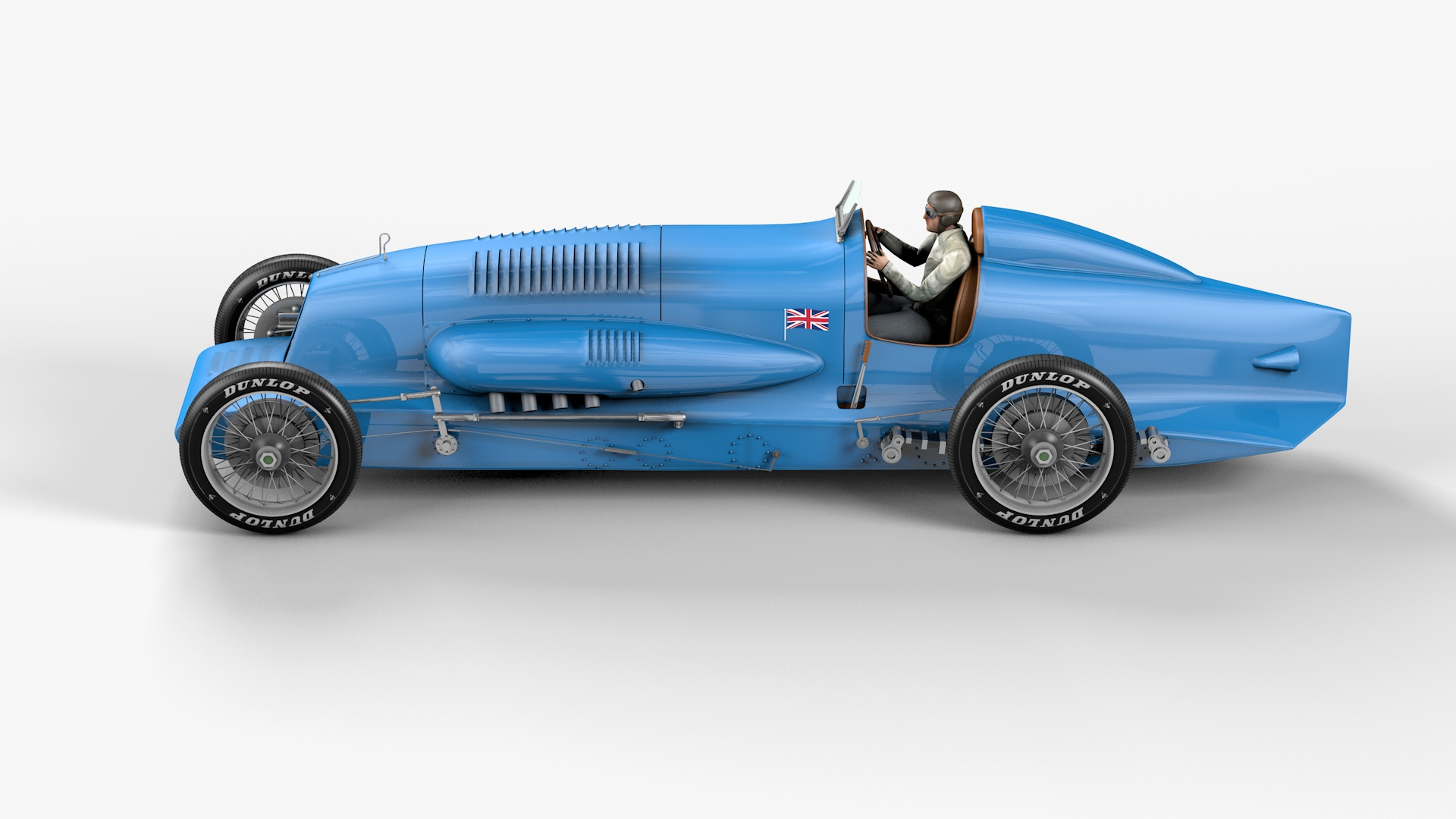
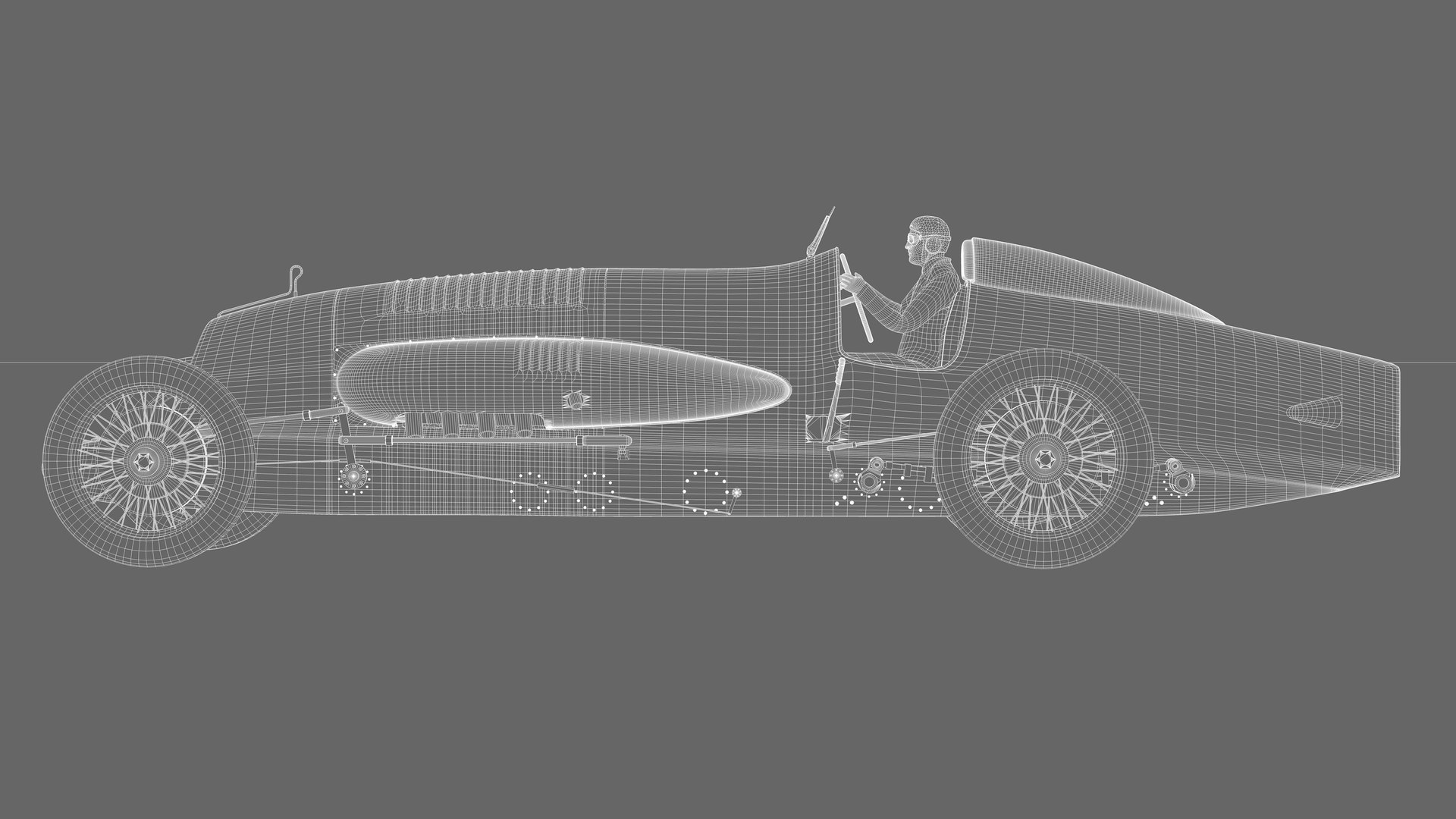
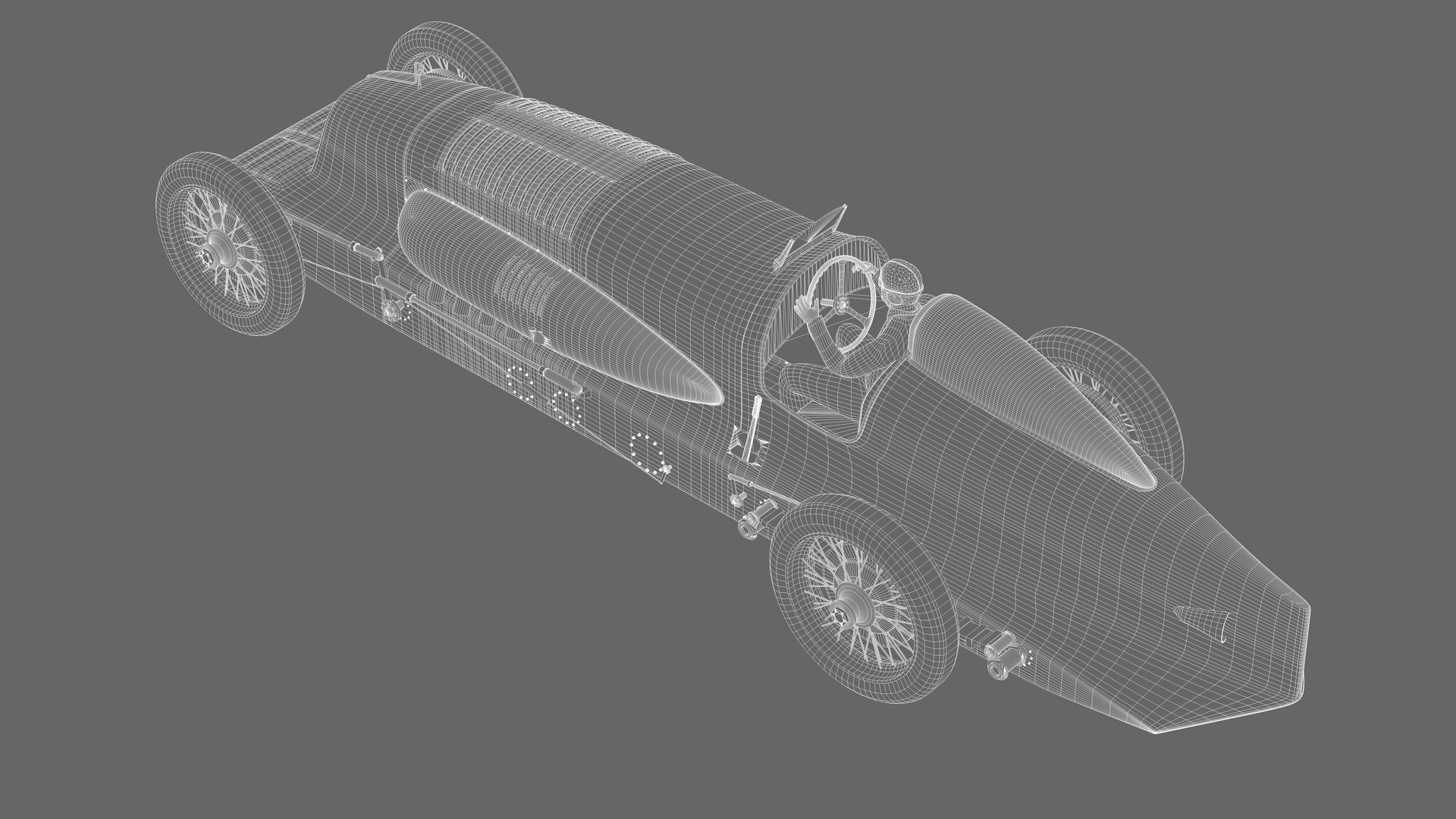
Model of Malcolm Campbell's 1927 Land speed record car.
The Napier-Campbell Blue Bird was
completed on 30 December 1926 and taken to Pedine Sands for its first
test on 2 January 1927. Running on the very wet beach, the gearbox was
hard to shift, the brakes were very inadequate, and the cockpit design
resulted in wet sand flying into Campbell’s face and covering his
goggles. The car was returned to Povey Cross where work was done on the
gearbox and brakes. A larger windscreen was installed, and wind
deflectors were added just in front of the cockpit sides. A significant
amount of air had been blowing out of the cockpit, and the updraft made
Campbell uncomfortable. To redirect the airflow, vents were added to the
car’s tail, and louvres were added to the previously smooth engine
cowling. Some sources indicate a new racing version of the Napier Lion
VA was installed. This engine had a higher compression ratio and
produced 585 hp (436 kW) at 2,350 rpm. It was built for the Gloster II
floatplane intended for the 1924 Schneider Trophy Contest, which was
postponed.
Napier-Campbell Blue Bird 1927 Pendine Record
Later, in mid-January, Campbell returned
to Pendine Sands but could only reach approximately 160 mph (257 km/h),
not fast enough to set a record. The poor conditions caused part of the
issue, but the car was still experiencing difficulties. Work continued
on the Napier-Campbell while everyone waited for better weather. On 20
January, Campbell made a record attempt and achieved 166.38 mph (267.76
km/h) against the wind and 171.30 mph (275.68 km/h) with it. The average
of 168.84 mph (271.72 km/h) was not sufficient for a new record.
Campbell made two more attempts on the record, but the beach conditions
prevented him from bettering his speed.
The Napier-Campbell was returned to Povey
Cross for more work and in the hope that better conditions would soon
prevail at the beach. Campbell and the car returned to Pendine Sands on
30 January 1927, but conditions were still far from ideal. On 3
February, Campbell had two furrows plowed along the beach to help drain
water and make a strip of dry sand. The work was somewhat successful,
and on 4 February, Campbell felt that the weather was tolerable and the
beach sufficiently dry to attempt a record. On his first run, he covered
the km (6 mi) at 179.157 mph (288.325 km/h). On the return, a bump
lifted Campbell out of his seat, and his head hit the slipstream. The
wind pushed Campbell’s goggles up his forehead, and he had to drive
squinting and with one hand while he pulled them down. The mishap
decreased Campbell’s speed to 169.291 mph (272.448 km/h). However, it
was still enough to set new records, averaging 174.883 mph (281.447
km/h) in the flying km (.6 mi) and 174.224 mph (280.386 km/h) in the
flying mile (1.6 km).